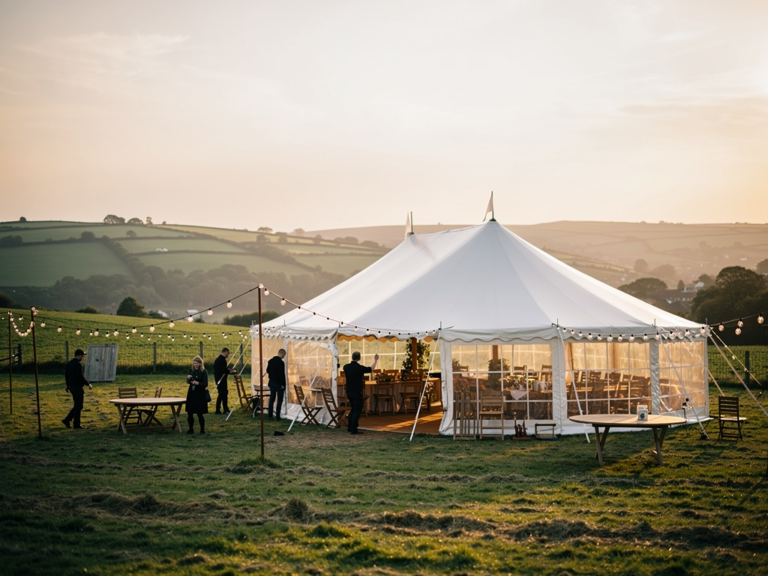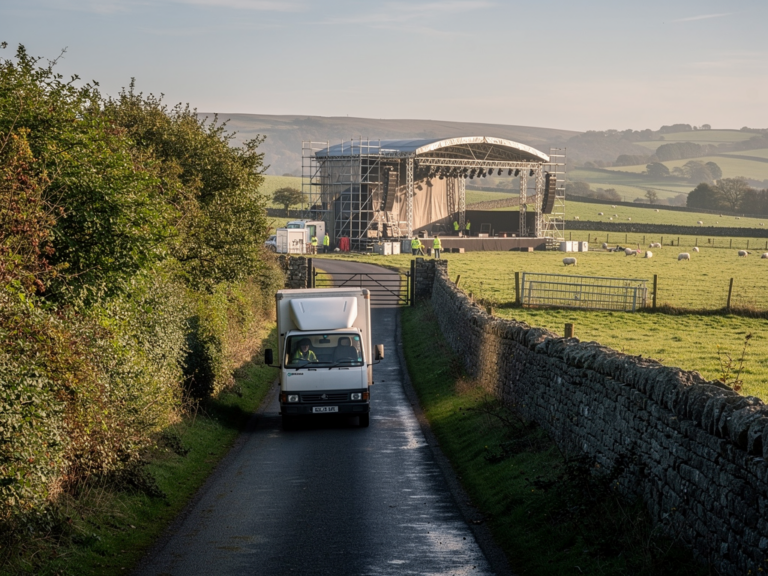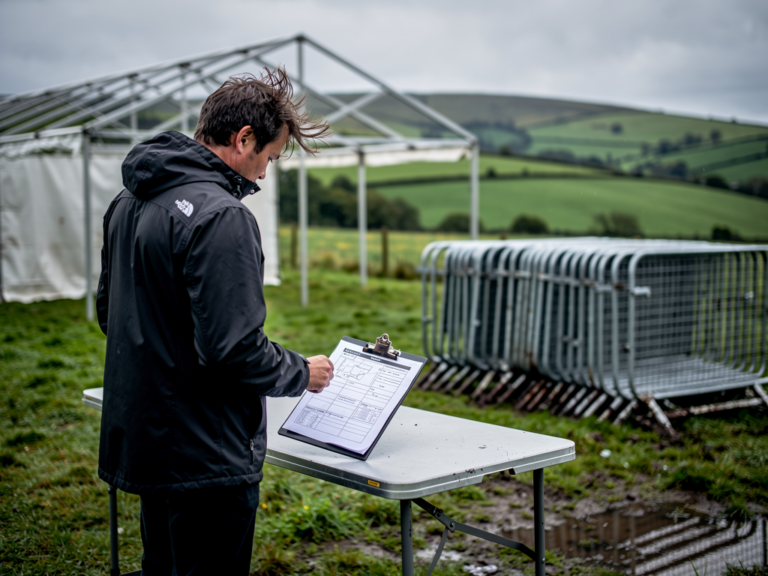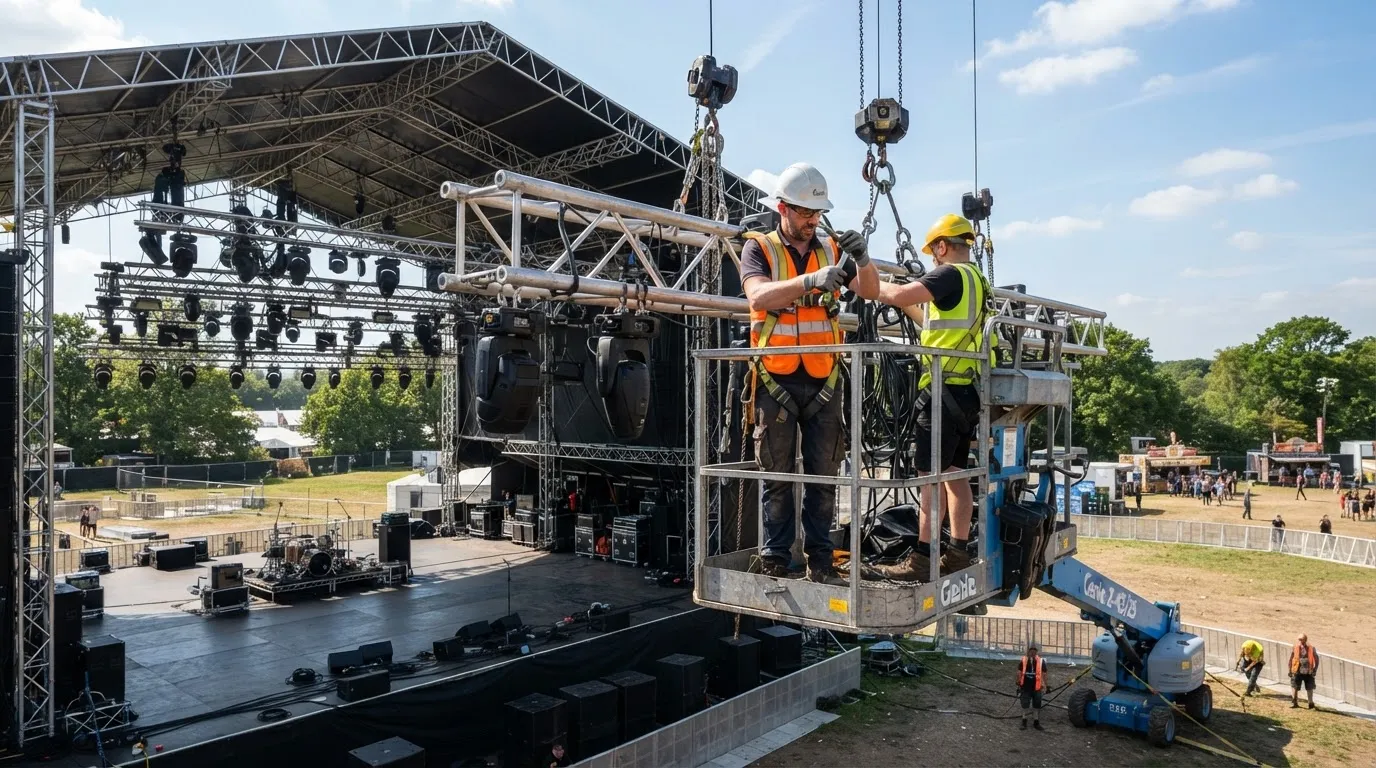
Almost every event build involves working at height: rigging lighting, hanging banners, fitting PA, building staging and dressing marquees. Falls from height are one of the biggest causes of serious injury at work in the UK, and event sites add their own pressures: uneven ground, tight schedules, weather and lots of people moving around underneath.
Here is how organisers and crew chiefs can plan work at height so it is done safely and efficiently.
The law in brief
The Work at Height Regulations 2005 apply wherever someone could fall a distance liable to cause injury, whether that is from a stage edge, a ladder or a platform. Work at height must be properly planned, supervised and carried out by competent people, using the right equipment. HSE’s work at height pages set out the duties and practical guidance.
Avoid, prevent, minimise
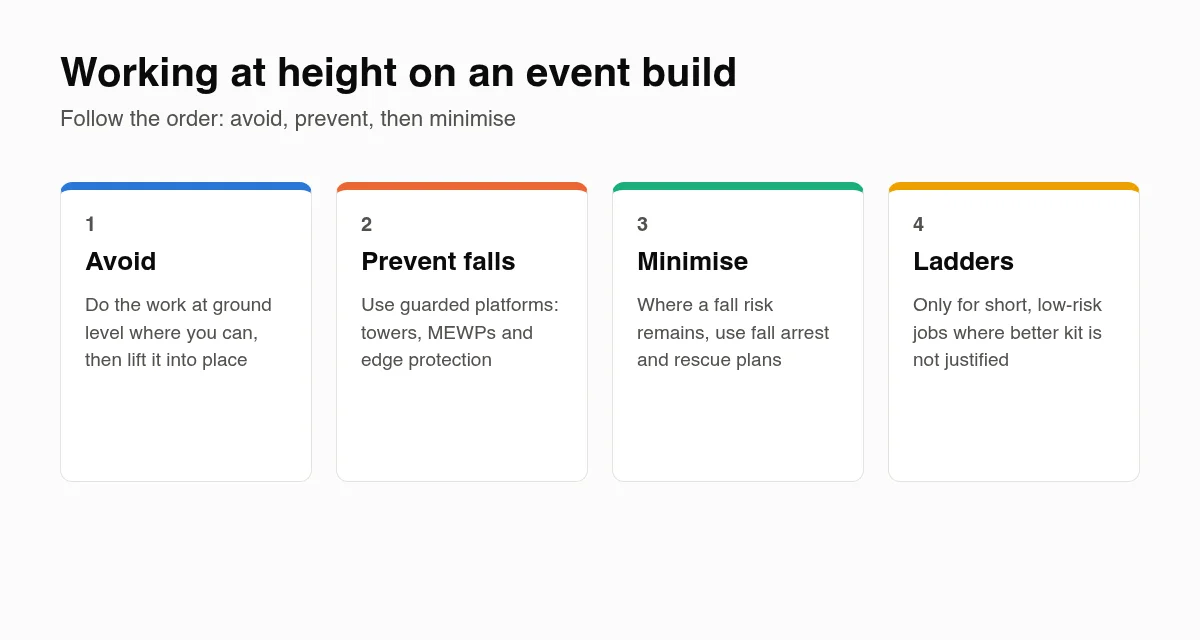
- Avoid working at height where you can. Build and wire truss at ground level, then lift it into place with motors or a suitable lifting system. Fit banners to frames on the ground. Use poles and tools that let crew work from the floor.
- Prevent falls where height work cannot be avoided, by using equipment with guardrails: mobile access towers, MEWPs, scaffold platforms and edge protection on staging.
- Minimise the distance and consequences of a fall where the risk remains, for example with fall arrest systems, and have a rescue plan in place.
Choosing the right access equipment
| Equipment | Good for | Watch out for |
|---|---|---|
| Ladders and stepladders | Short, simple, low-risk tasks | Not for heavy loads or long jobs; need firm, level footing and three points of contact |
| Mobile access towers | Repeated work at moderate height, such as dressing a stage or fitting lights | Must be built by trained people to the manufacturer’s instructions; wheels locked; check wind limits outdoors |
| MEWPs (scissor and boom lifts) | Rigging, trussing and high work over larger areas | Need trained operators, firm ground, outrigger checks and attention to wind and overhead hazards |
| Staging edge protection | Building and working on stage decks | Guardrails must go up as early as possible in the build |
Ground conditions matter at outdoor events. Soft fields, slopes and hidden cable trenches can make towers and MEWPs unstable. Check ground bearing and use spreader plates where needed. Your site plan should show where heavy access equipment will travel and work.
Training and competence
- Anyone operating a MEWP should be trained and familiarised with the specific machine.
- Towers should be erected, altered and dismantled by people trained to do so.
- Crew using harnesses need training in fitting, using and checking them, and there must be a rescue plan.
- Ask for evidence of training when booking crew or contractors for height work.
Inspections and checks
Access equipment needs checking before use, and some equipment needs formal inspection. MEWPs and other equipment used to lift people fall under LOLER and need regular thorough examinations by a competent person. HSE’s LOLER guidance explains what is required. Ask hire companies for current examination reports, and do pre-use checks on site each day.
Protecting people below
- Set up exclusion zones under overhead work with barriers or tape.
- Tether tools and secure loose items when working above people.
- Plan the build so height work does not happen above other trades at the same time.
- Hard hats should be worn in areas with overhead work.
Weather and timing
Wind affects towers, MEWPs and anyone handling large banners or panels at height. Check the manufacturer’s wind limits and agree stop-work trigger points in advance, as covered in our guide to planning for bad weather. Fatigue matters too: height work late at night after a long load-in is where mistakes happen.
Put it in the plan
Work at height should appear in your event risk assessment and be covered in the crew briefing, including where equipment will be used, who is trained to use it and what the exclusion zones are.
Experienced crew for your build
Idloes Stage Crew supplies experienced event crew across Mid Wales and the borders for staging, rigging support and site builds. See our services or book crew for your event.