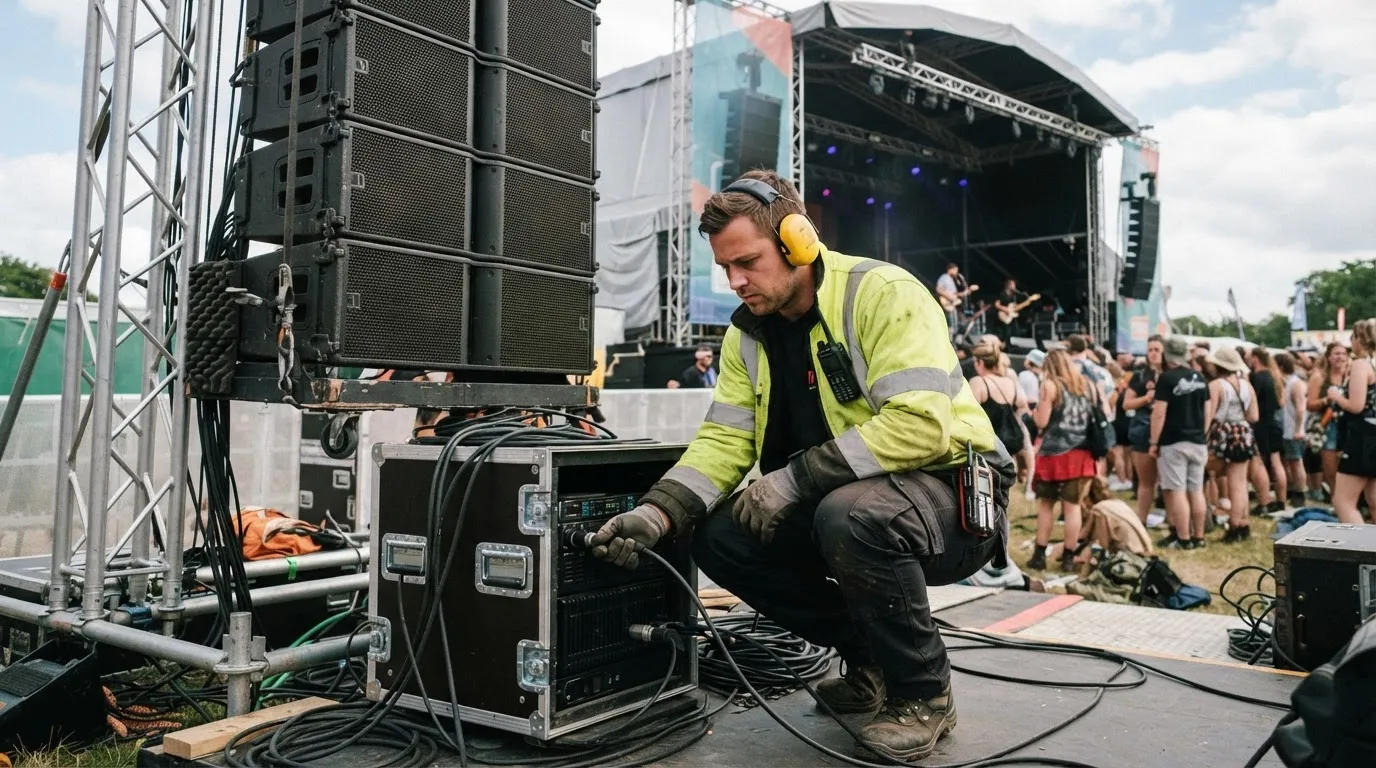
Loud music is the point of many events, but the people working them hear far more of it than the audience. Stewards at the stage front, bar staff, sound engineers and crew working through soundchecks and shows can be exposed to high noise levels for hours at a time, day after day. Noise-induced hearing loss is permanent, and tinnitus can follow.
Employers of event workers have legal duties to manage that risk. Here is what the law requires and how to put it into practice on site.
What the law says
The Control of Noise at Work Regulations 2005 apply to the music and entertainment sectors as they do to any workplace. They set daily or weekly exposure levels at which employers must act:
| Level | Daily or weekly personal noise exposure | What it means |
|---|---|---|
| Lower exposure action value | 80 dB(A) | Assess the risk, provide information and training, and make hearing protection available |
| Upper exposure action value | 85 dB(A) | Reduce exposure as far as reasonably practicable, set up hearing protection zones and make sure protection is worn |
| Exposure limit value | 87 dB(A) | Must not be exceeded, taking hearing protection into account |
HSE’s noise at work pages explain these duties and include guidance for the music and entertainment sectors. Noise should be part of your event risk assessment, alongside the wider safety planning covered by HSE’s event safety guidance.
Four steps to protect crew hearing
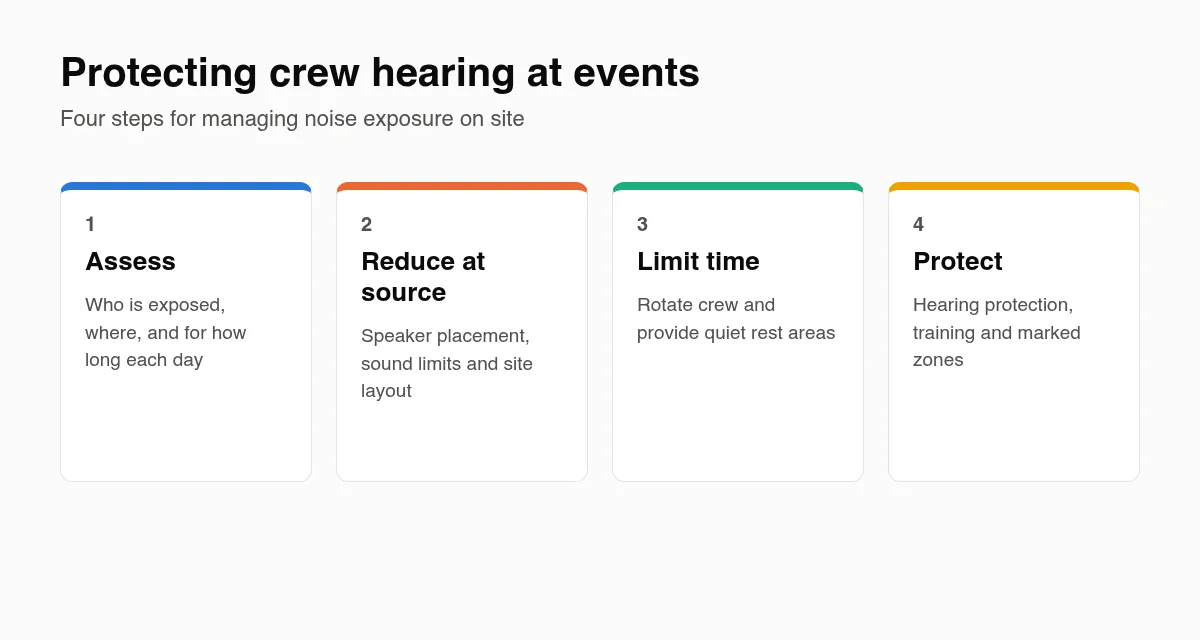
1. Assess who is exposed
- List the roles that work in loud areas: stage front, front of house, bars near stages, backstage and monitor positions.
- Think about how long each person spends there, including soundchecks and rehearsals, not just show time.
- Use sound level measurements from the sound team or a competent person to estimate exposure.
2. Reduce noise at source
- Agree sound limits with the production team and monitor them during the show.
- Position speakers and delay towers to cover the audience rather than work areas.
- Place bars, crew rest areas and production offices away from main speaker stacks on your site plan.
3. Limit time in loud areas
- Rotate stewards and crew between loud and quieter positions.
- Provide quiet rest areas where people can recover.
- Schedule noisy build tasks, such as power tools and generators, away from times when crew are already exposed to show noise.
4. Hearing protection
Hearing protection is the last line of defence, not the first. Where it is needed:
- Provide suitable protection. Flat-response earplugs let crew hear speech and radio messages more clearly than standard foam plugs.
- Mark hearing protection zones, such as the stage front pit.
- Train people to fit protection properly and explain why it matters.
- Make sure people can still hear alarms and radio calls. Communication headsets with hearing protection are useful for key roles.
Do not forget the build
Noise is not only a show-time issue. Generators, forklifts, power tools and stage building all add up over a long build day. The temporary power plan should consider where generators sit relative to crew areas, and noise should be covered in the crew briefing.
Signs of a problem
Ringing in the ears or muffled hearing after a shift is a warning sign that exposure was too high. Encourage crew to report it, and review the arrangements. Regular workers in loud environments may need health surveillance, such as hearing checks.
Crew who know the site
Idloes Stage Crew supplies experienced, briefed event crew across Mid Wales and the borders. See our services or book crew for your event.