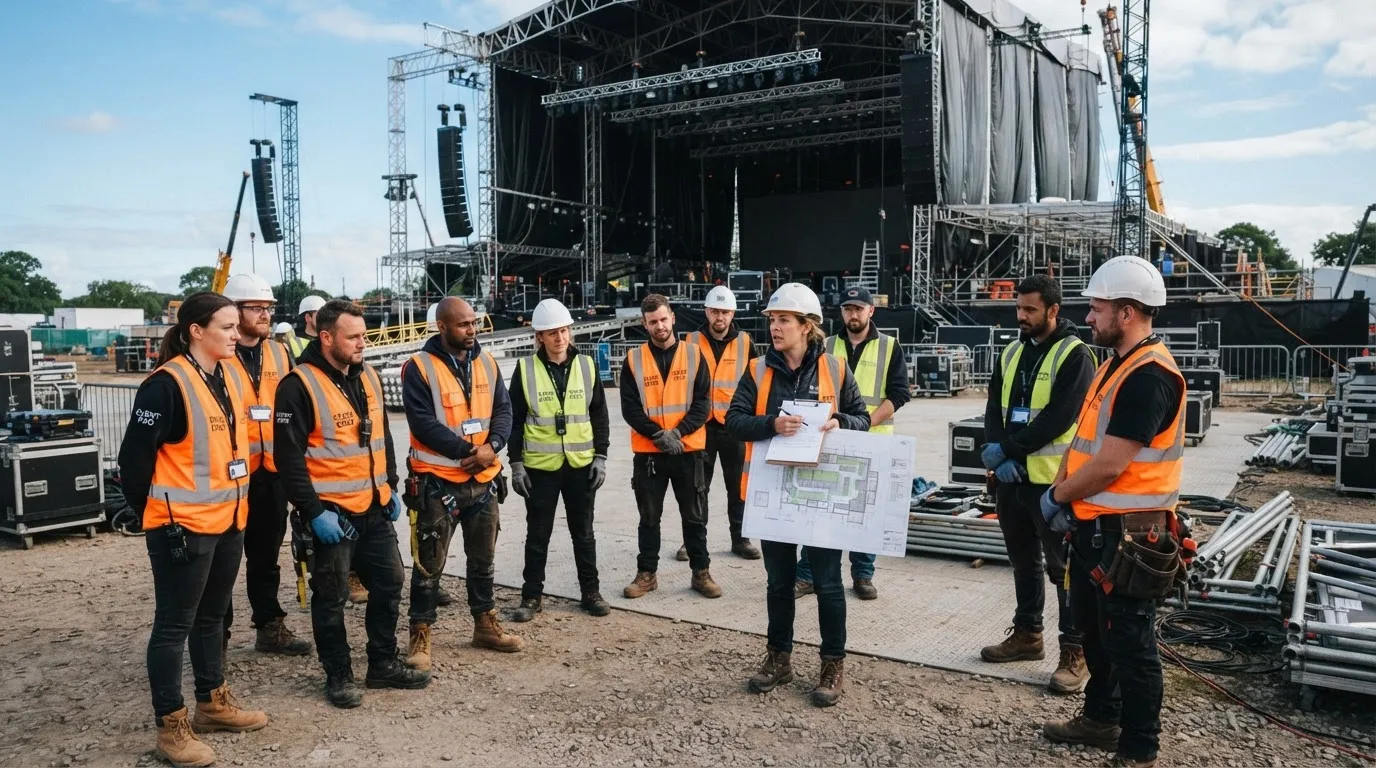
On a busy build day, it is tempting to skip the briefing and get straight to work. That is usually a mistake. A crew that starts the day without knowing the plan, the site rules or where the first aider is will work slower and less safely. A good briefing takes ten to fifteen minutes and pays that back many times over.
This guide covers the difference between a site induction and a daily briefing, what to include in each, and how to make them stick.
Induction or briefing?
- A site induction is for anyone arriving on site for the first time. It covers the site layout, rules, hazards and emergency arrangements that apply throughout the event.
- A daily or shift briefing is for the whole crew at the start of each shift. It covers what is happening today, any changes and the specific risks of today’s tasks.
On a short, simple event you can combine them. On a multi-day build, keep both: an induction for each new arrival and a quick briefing each morning.
Why it matters legally
Employers have a duty under health and safety law to give workers the information, instruction and training they need to work safely, and to share the findings of the risk assessment with them. On event sites, where several contractors work side by side, everyone also needs to know how their work affects others. HSE’s event safety guidance covers how this applies to events, including the build and breakdown. A briefing is one of the simplest ways to show you have done it.
What to cover
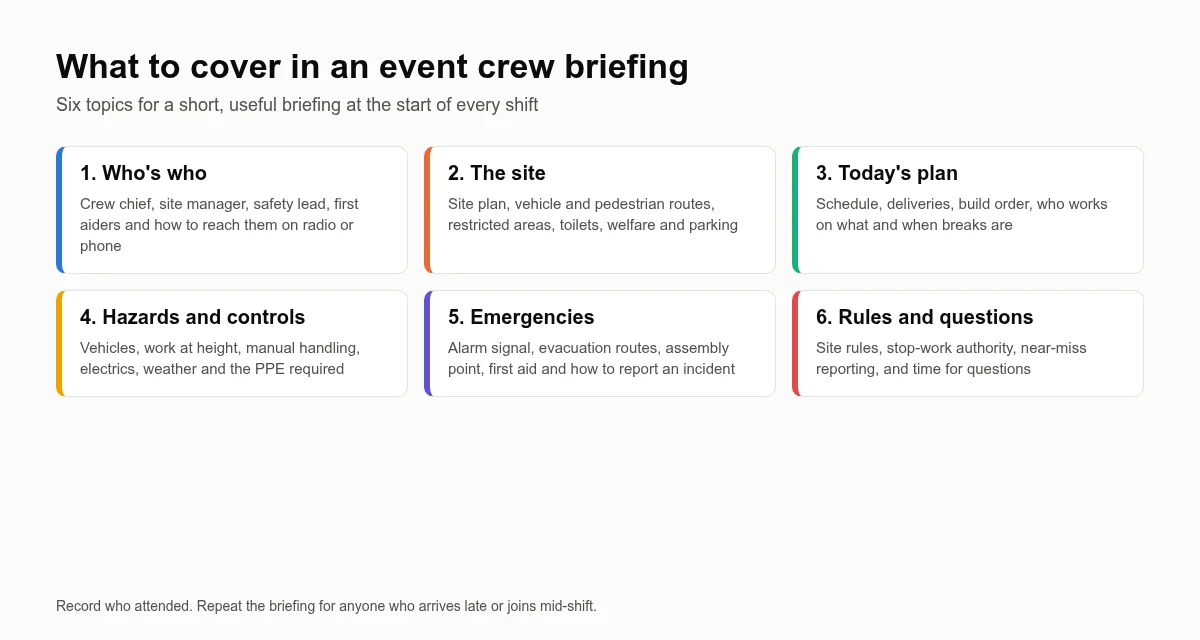
1. Who’s who
Introduce the crew chief, site or production manager, safety lead and first aiders. Give radio channels and phone numbers. Make sure everyone knows who they report to.
2. The site
Walk through the current site plan: vehicle routes, pedestrian routes, restricted areas, toilets, welfare, smoking areas and parking. Point out anything that has changed since yesterday.
3. Today’s plan
Run through the schedule, deliveries and build order, who is working on what, and when breaks are. A clear plan reduces rushing, which is one of the biggest causes of accidents. Our guide to load-in and load-out planning covers scheduling in more detail.
4. Hazards and controls
Focus on the significant risks of today’s work, not a list of everything that could possibly go wrong. On most event builds that means moving vehicles and forklifts, work at height, manual handling, temporary electrics and the weather. Say what PPE is required and where to get it. Your event risk assessment should be the source for this section.
5. Emergencies
Explain the alarm or signal, evacuation routes, assembly point, where first aid is and how to report an incident. If high winds or lightning could stop work, say what the trigger points are and who makes the call; our bad weather planning guide explains how to set them.
6. Rules and questions
Cover site rules such as no alcohol, hi-vis in vehicle areas and no lone working at height. Make it clear that anyone can stop a job they think is unsafe, and that near misses should be reported without blame. Always leave time for questions.
Making briefings stick
| Do | Avoid |
|---|---|
| Keep it to 10 to 15 minutes | Reading out the whole risk assessment |
| Hold it on site, near the work, with the site plan | Briefing in a noisy area where people cannot hear |
| Use plain language and real examples | Jargon and long lists of rules |
| Ask questions to check understanding | Assuming silence means everyone understood |
| Record attendance and brief late arrivals | Letting people start work without a briefing |
| Consider language needs on mixed crews | Assuming everyone reads English fluently |
Recording it
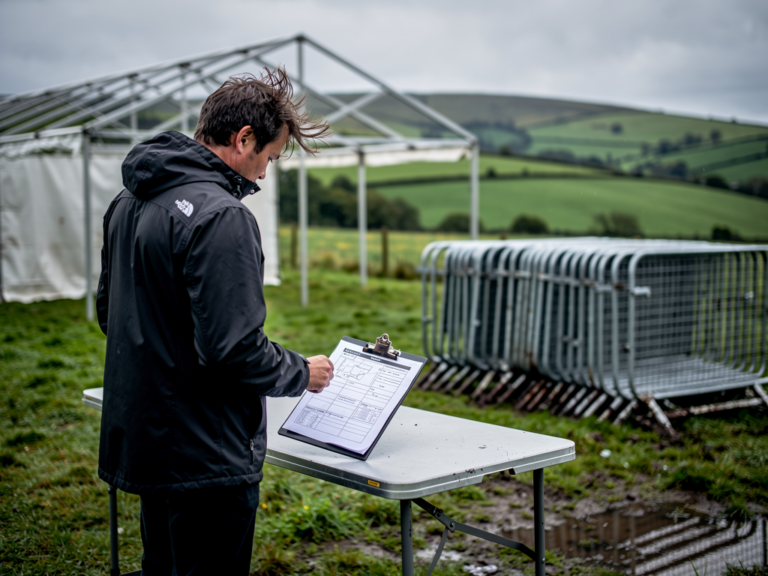
Keep a simple sign-in sheet for each briefing with the date, time, topics covered, who gave it and who attended. It takes seconds and gives you a record if anything goes wrong. Note any questions or concerns raised and what was done about them.
Crew who arrive ready
Idloes Stage Crew supplies experienced, safety-aware crew across Mid Wales, Shropshire and the borders, and our crew chiefs can run briefings for your build. See our services, read about us, book crew online or get in touch.