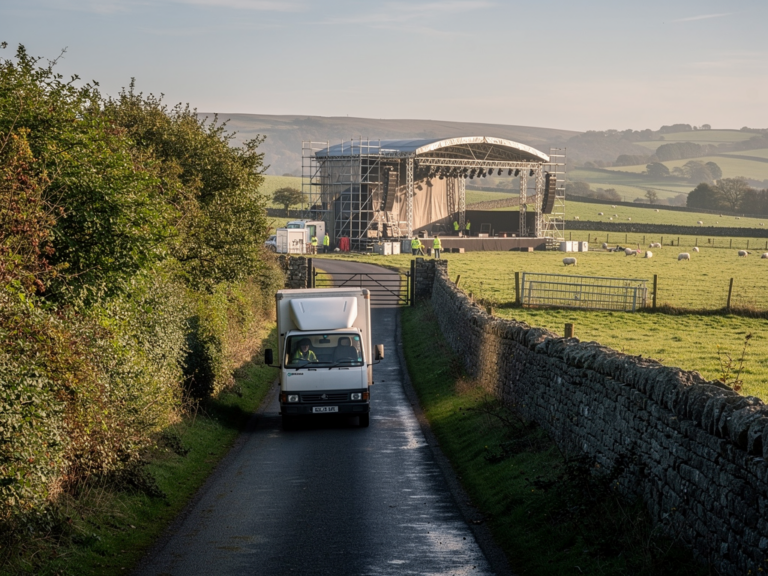
The audience sees a few hours of show. Behind that are the hours nobody sees: trucks backing into a muddy field at dawn, staging going up, lighting being rigged, then the whole lot coming down again in the small hours. Get the load-in and load-out wrong and the show starts late, your venue charges overtime, or someone gets hurt. Get it right and nobody notices, which is exactly the point.
This guide explains how experienced production managers plan a build and de-rig, how to estimate how many crew you actually need, and the UK health and safety duties that apply.
Load-in, show call and load-out: the three phases
- Load-in (the build or get-in) is unloading vehicles and building everything: staging, rigging, lighting, audio, video, set, furniture and power distribution.
- Show call is the smaller team that stays on during the event for changeovers, running cables, moving furniture and dealing with problems.
- Load-out (the de-rig or get-out) is taking it all down and loading it back onto the trucks, often against a hard venue curfew.
Load-out is usually faster than load-in, because nothing needs focusing or testing, but it happens when everyone is tired, which makes it the riskiest part of the day.
Start with the information you need
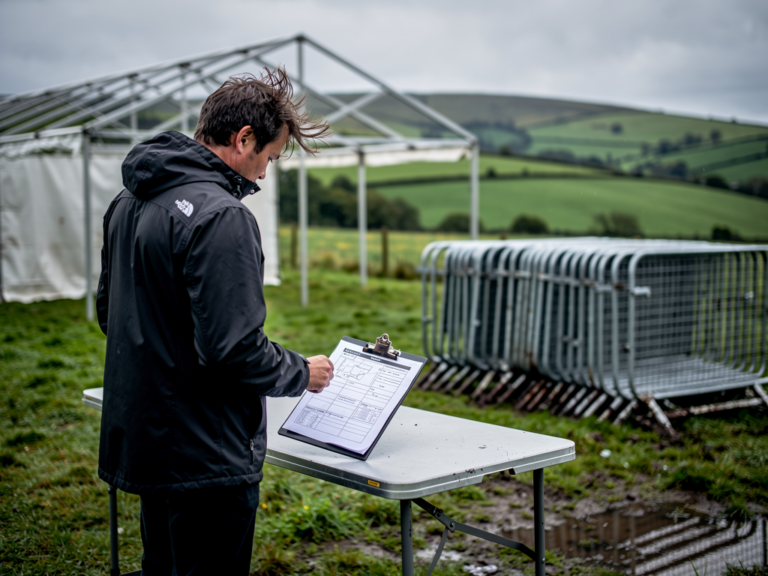
Before you can put a number on crew, gather the facts that drive the workload:
- Kit list and truck count. How many vehicles, what size, and how is the kit packed (flight cases on wheels or loose items)?
- Access. Distance from the dock or vehicle to the stage, stairs, lifts, door widths, ground conditions and whether vehicles can get close.
- Time windows. When the venue opens, when doors open to the public, and the curfew for load-out.
- What is being built. Staging, ground support or flown rigging, LED screens and marquee dressing each need different skills and time.
- Who else is on site. Supplier technicians, caterers and florists all compete for the same access route.
How to estimate crew numbers
There is no single formula, because a 40-metre carry up two flights of stairs is a very different job from rolling cases down a ramp onto a flat floor. A practical approach is:
- Estimate the work in person-hours. Ask each supplier how long their part takes with a given team. A lighting supplier might say “four people, three hours”: that is 12 person-hours.
- Add the unload and carry time. This is where local crew make the biggest difference. Long carries and stairs can double handling time.
- Divide by the time you have, leaving at least 20 to 30% contingency for late trucks, weather and problems found during testing.
- Check for bottlenecks. More crew only helps if they can work in parallel. If there is one narrow door, twelve people will simply queue.
As a rough illustration, a single-truck corporate conference set in a hotel ballroom with good dock access is often handled by four to six crew. A two- or three-truck festival stage with ground support, flown lighting and an LED wall may need twelve to twenty on the build. These are starting points to test against your own job, not rules.
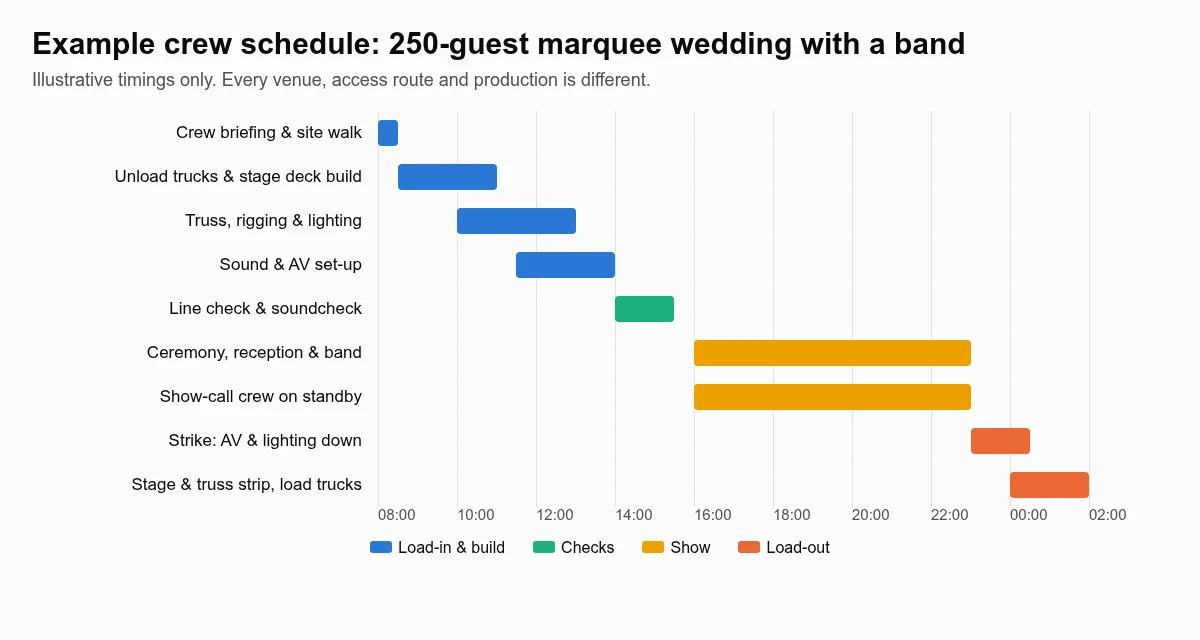
An example schedule: 250-guest marquee wedding
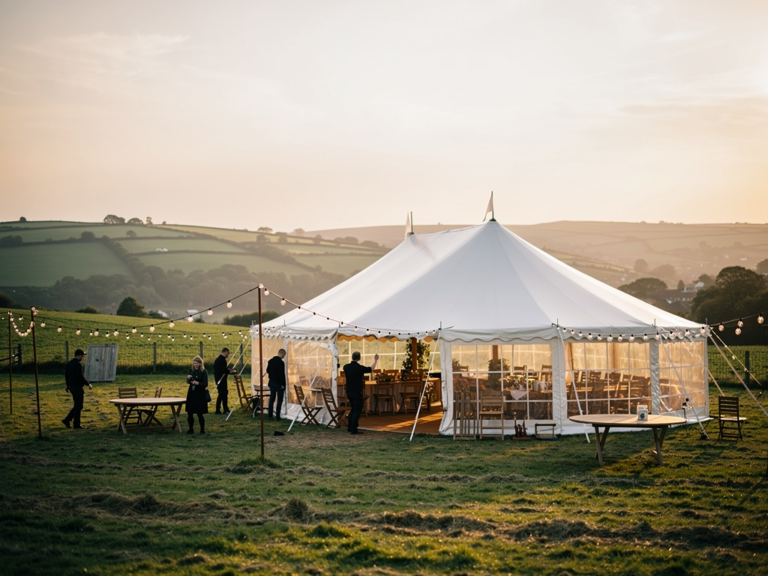
The chart below shows how crew numbers might flex over the day for a typical rural marquee wedding with a band, dance floor, lighting and furniture. Notice how the team is largest during the build and the de-rig, and shrinks to a small show crew in between.
Building a load-in schedule that works
The order of work matters as much as the number of people. A typical sequence is:
- Mark out and protect floors, set up power distribution.
- Build staging and any ground support or truss.
- Rig and fly anything overhead while the floor is still clear.
- Bring in audio, video and backline.
- Set furniture, dressing and catering.
- Test, focus, sound check and clear the space.
Stagger vehicle arrivals in that same order so the right kit arrives when the space is ready for it. The load-out normally runs in reverse.
Health and safety: the legal basics
Builds and de-rigs are workplaces, and the same UK health and safety law applies as on any site. The HSE’s event safety guidance is the place to start, and covers how the Construction (Design and Management) Regulations 2015 apply to building and dismantling structures such as stages at events.
Manual handling
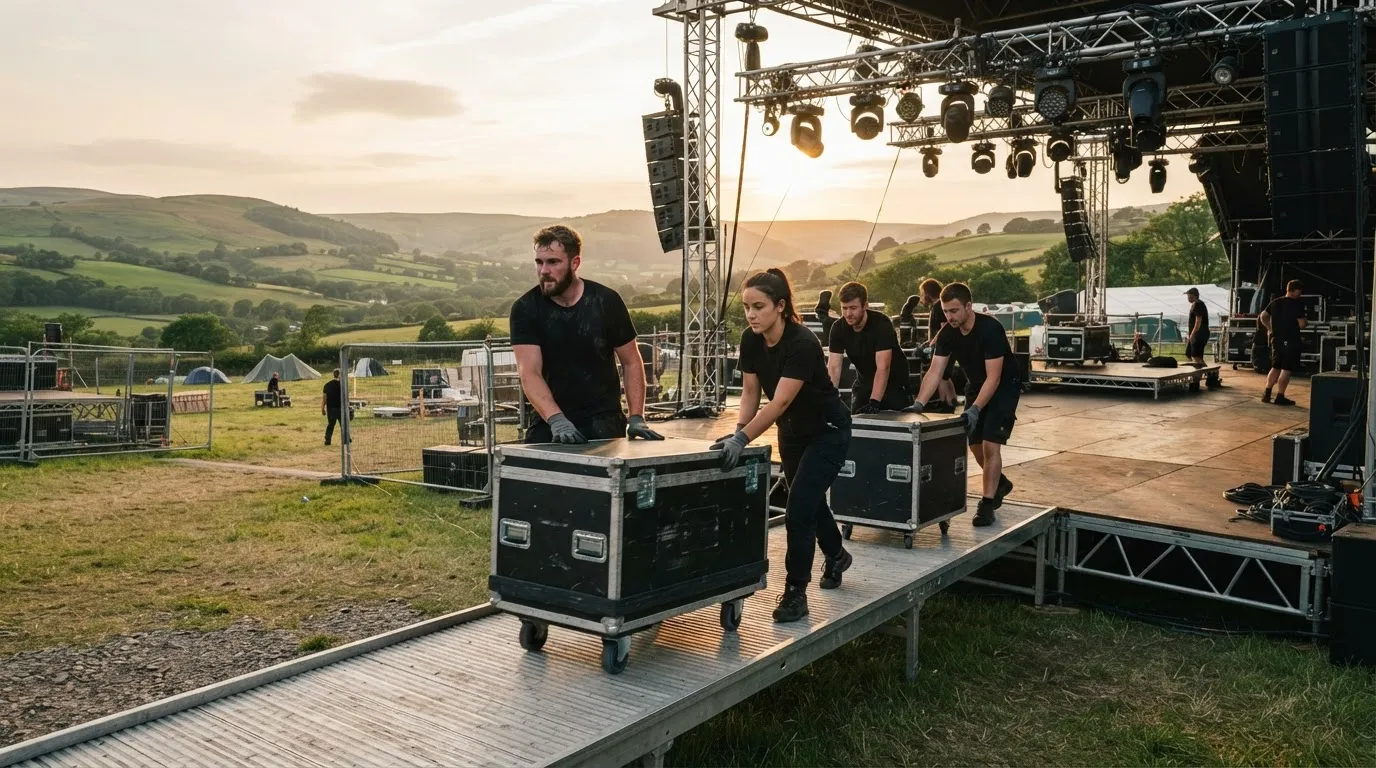
Lifting and carrying is the core of load-in work and a common cause of injury. Under the Manual Handling Operations Regulations 1992, employers must avoid hazardous manual handling where reasonably practicable, assess what cannot be avoided and reduce the risk. HSE’s manual handling guidance uses the TILE approach: look at the Task, the Individual, the Load and the Environment. In practice that means using ramps, dollies and cases on wheels, team lifts for heavy items, and enough crew so nobody is rushing.
Work at height
Rigging lights, building truss and dressing marquees all involve working at height. The Work at Height Regulations 2005 require work at height to be properly planned, supervised and carried out by competent people using the right equipment. HSE’s work at height guidance explains the hierarchy: avoid it where you can, prevent falls where you cannot, and minimise the consequences of a fall where risk remains.
Industry guidance
The Purple Guide to health, safety and welfare at music and other events is widely used by organisers and licensing authorities, and is worth knowing if you run outdoor events.
Fatigue and the load-out
The most common planning mistake is assuming the people who built the show at 8am can take it down safely at 1am. Long shifts make injuries and damage more likely. Where possible, bring in a fresh crew for the load-out, schedule proper breaks, and plan lighting for dark car parks and fields.
Load-in planning checklist
- Site visit or detailed access information from the venue
- Kit list, truck count and arrival times from every supplier
- Person-hour estimate, with 20 to 30% contingency
- Running order for the build, with vehicle slots to match
- Risk assessment covering manual handling, work at height and vehicle movements
- Named crew chief who knows the plan and briefs the team
- Separate or refreshed crew for the load-out, with breaks planned
- PPE: safety boots, gloves, hi-vis and hard hats where overhead work is happening
Experienced crew, wherever your event is
Idloes Stage Crew supplies experienced, reliable event crew across Mid Wales and the borders, from single-truck corporate events to festival builds. Take a look at what our crew can do, meet the team, see who we work with, or read more about us. If you are planning an event near Shropshire, see our page on event crew hire in Shrewsbury. When you are ready, book your crew or get in touch and we will help you work out the numbers.