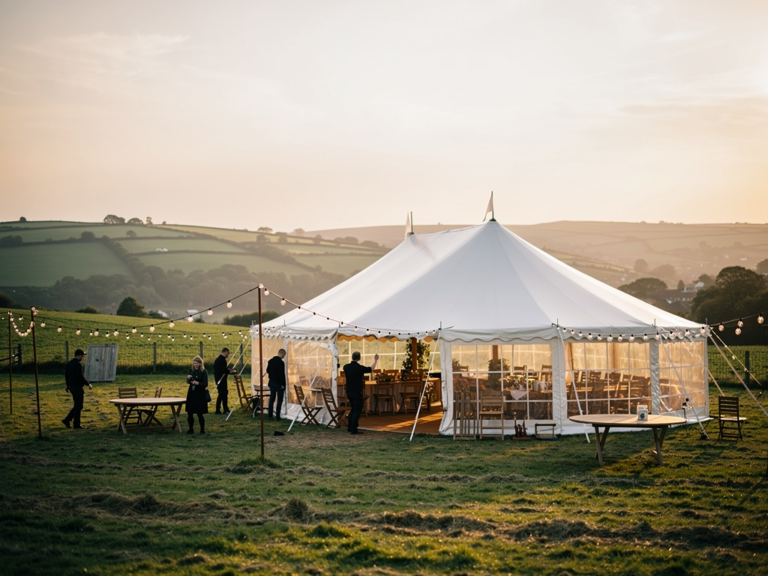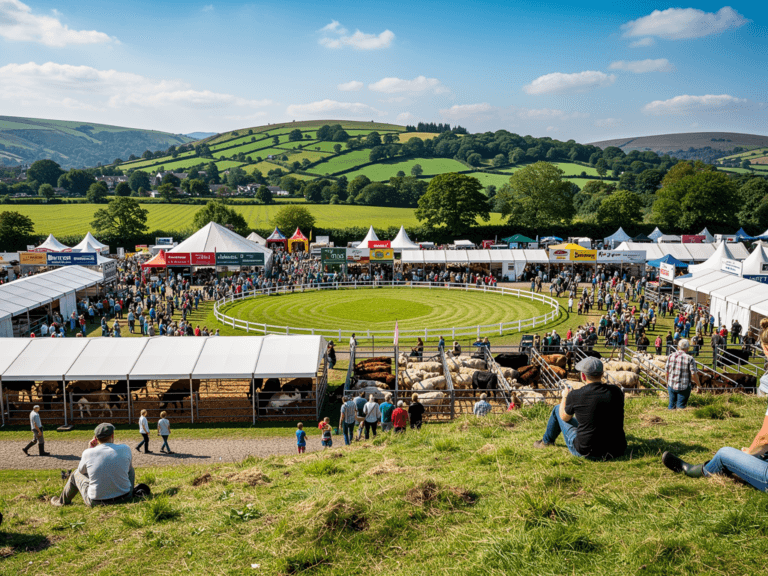
Mid Wales is a wonderful place to hold an event, but it is not a city. Powys alone covers more than 5,000 square kilometres and is the largest and most sparsely populated county in Wales. Venues are often fields, farms and village halls at the end of narrow lanes. That changes how you plan access, communications, travel and power. This guide covers the things that most often catch organisers out.
Getting vehicles on and off site
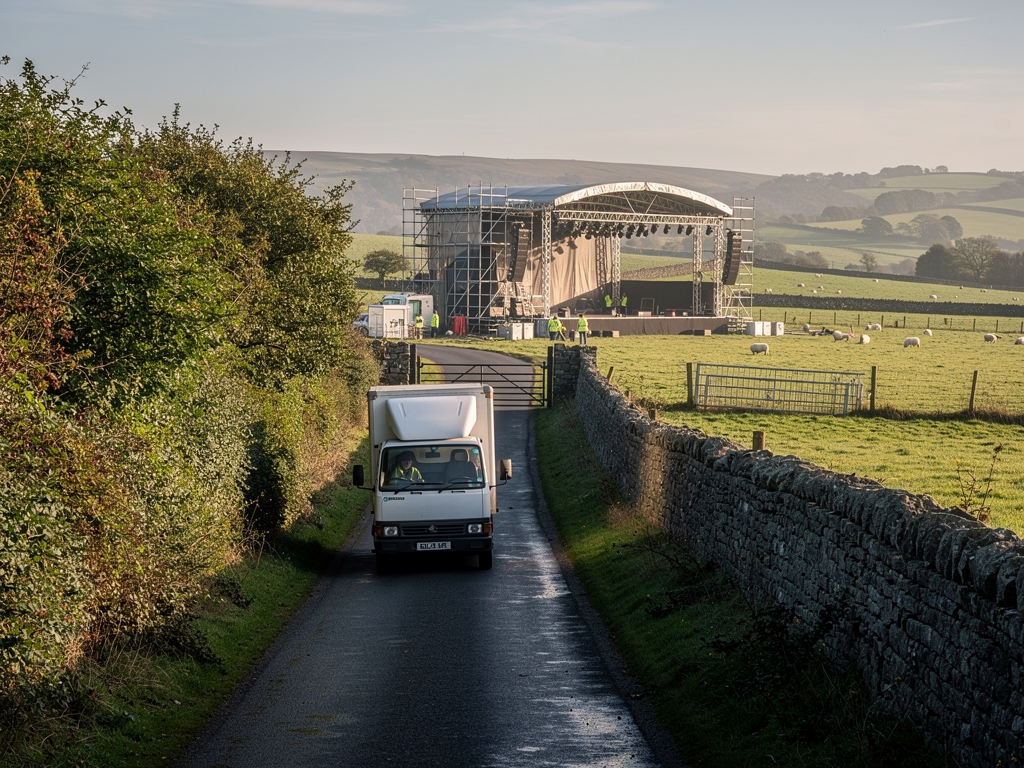
Most problems on rural event days start at the gate. Before you book suppliers, walk the route a lorry will take from the main road to where it needs to park.
- Lanes. Many lanes are single track with few passing places, overhanging trees and stone walls. Ask suppliers what size of vehicle they will send and check it will fit, including the mirrors.
- Gates and bends. Measure gate widths and look at the turning space. A lorry that can get in may not be able to turn round.
- Weight limits. Look out for weight-restricted bridges and cattle grids on the route.
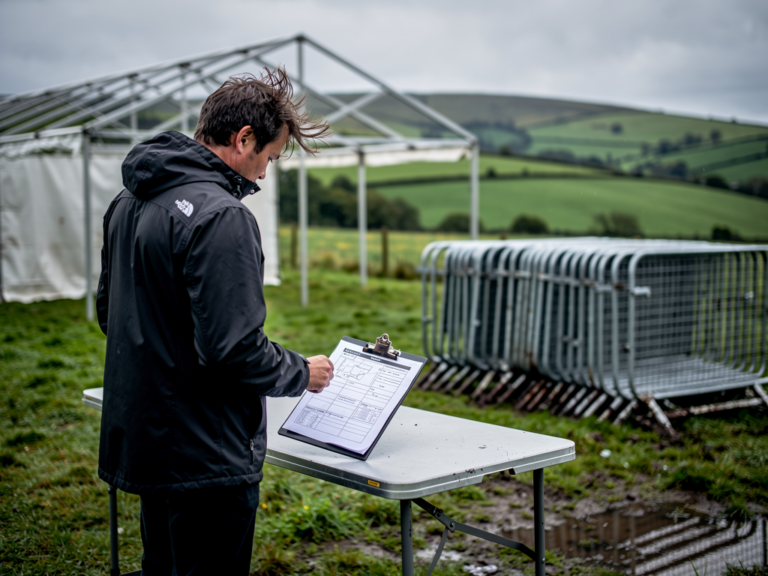
- Ground conditions. A field that is firm in a dry spell can be impassable after a night of rain. Plan where heavy vehicles will run, and have trackway or a tractor on standby if the ground is soft.
- Hidden hazards. Ask the landowner about field drains, water pipes and buried cables before anyone drives in stakes or ground pins.
Put all of this on your event site plan and share it with every supplier, so drivers know where to go before they arrive.
Mobile signal: do not rely on it
Mobile coverage in Wales has improved, but rural gaps remain. According to Ofcom’s Connected Nations report, in September 2024 95% of the landmass of Wales had 4G from at least one mobile network, but only 75% had 4G from all four operators, and 5% had no 4G at all. In the hills and valleys of Mid Wales, signal can drop out within a few hundred metres.
That matters for more than phone calls:
- Card payments at bars and stalls may not work. Check with traders whether their card readers can work offline, and have a cash option.
- E-ticket scanning at the gate may need offline mode or a dedicated internet connection.
- Staff communications should not depend on mobile phones. Two-way radios are far more reliable on a rural site.
- Emergency calls. Check where on site you can reliably call 999, and include it, with the site’s what3words or grid reference, in your crew briefing.
On your site visit, check signal on each network across the whole site, not just at the gate.
Roads and travel times
The main routes through Mid Wales are the A470, which runs north to south through Llanidloes, Rhayader, Builth Wells and Brecon; the A483 through Welshpool, Newtown, Llandrindod Wells and Builth Wells; the A44 from Rhayader through Llangurig to Aberystwyth; the A458 between Welshpool and Shrewsbury; and the A487 along the coast through Aberystwyth and Machynlleth. Off these, journeys are on smaller roads where average speeds are lower than the distance suggests.
Since September 2023, the default speed limit on restricted roads in Wales, usually roads in built-up areas with street lighting, has been 20mph. Some roads have since been reviewed and returned to 30mph, but expect slower progress through towns and villages. Build realistic travel times into your schedules for deliveries, crew and performers, and allow extra in summer when the roads are busy with visitors and farm traffic.
Trains: useful, but plan around the timetable
Two railway lines serve Mid Wales:
- The Cambrian Line runs from Shrewsbury through Welshpool, Newtown, Caersws and Machynlleth to Aberystwyth, with a branch along the coast. Trains run roughly every hour, with some longer gaps.
- The Heart of Wales Line runs from Craven Arms in Shropshire to Llanelli, calling at Knighton, Llandrindod Wells, Builth Road (about two miles from Builth Wells) and Llanwrtyd Wells. There are only a handful of trains a day.
If guests, volunteers or performers are travelling by train, check the last train times before you fix your finish time, and consider a shuttle from the nearest station.
Power
Many rural sites have no mains power at all, so you will usually be relying on generators. Plan your total load, where the generator will sit, how cables will be protected and who will refuel it. Our guide to temporary power at outdoor events covers this in detail.
Weather and daylight
Upland weather in Mid Wales can change quickly, with strong winds on exposed sites and heavy rain that soaks fields within hours. Have a plan for wind, rain and heat, and agree in advance who decides to stop work or close structures. See our guide to planning for bad weather at outdoor events. Rural sites are also very dark at night, so light walkways, car parks and the load-out area.
Welfare for crew and volunteers
On a remote site there is often no shop, café or toilet nearby. Make sure crew and volunteers have toilets, drinking water and somewhere to shelter from the moment the build starts, not just when the public arrive.
Site visit checklist
- Drive the route from the main road in the size of vehicle your suppliers will use, or ask them to.
- Measure gates and turning areas, and note weight limits on bridges and cattle grids.
- Walk the ground and ask the landowner about drains, pipes, cables and how it copes with rain.
- Check mobile signal on all four networks across the site, and agree how staff will communicate.
- Find the nearest point a 999 call reliably connects, and note the site’s grid reference or what3words.
- Plan generator positions, cable routes and refuelling.
- Mark crew parking as close to the work area as possible.
- Note the nearest railway station and the last train times.
Local crew who know the lanes
We are based in Llanidloes and work on sites across Mid Wales every season, from village halls in Llanfair Caereinion and Llanfyllin to farm fields near Rhayader, Knighton, Presteigne and Tregaron. If your site has awkward access, tell us when you request a quote and we will plan the crew and timings around it. You can also read about what event crew costs in Mid Wales.