Almost every outdoor event runs on temporary power: stage sound and lighting, bars and food stalls, toilets, site lighting, production offices and phone charging. When it works, nobody notices. When it fails, the show stops. And when it is badly installed, temporary electrics can kill. Wet ground, damaged cables, crowds and tight build schedules make events a tough environment for electrical safety.
This guide covers the main things organisers need to plan, and what to expect from your event electrician and crew. It is not a substitute for a competent electrical contractor.
Who is responsible?
The Electricity at Work Regulations 1989 require electrical systems to be constructed, maintained and used so as to prevent danger, and work on them to be done by people competent to do it. At an event, that responsibility is shared between the organiser, the power supplier and the contractors who connect to the system. In practice, appoint a competent event electrician to design, install and test the system, and make sure everyone knows who is in charge of the power on site. HSE’s electrical safety guidance and event safety pages explain the duties.
The essentials
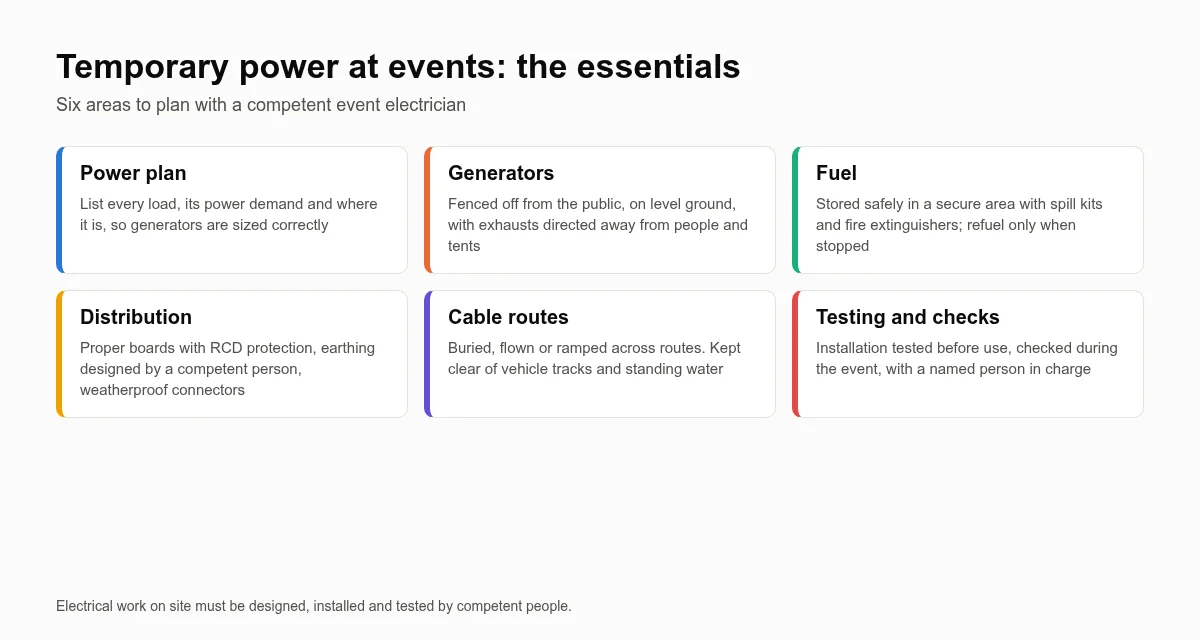
1. A power plan
Start by listing everything that needs power, roughly how much each draws, and where it is on site. Ask traders and suppliers for their requirements early, including any equipment with high start-up loads such as fridges or heaters. This lets your electrician size generators and distribution properly and avoid overloads on the day.
2. Siting generators
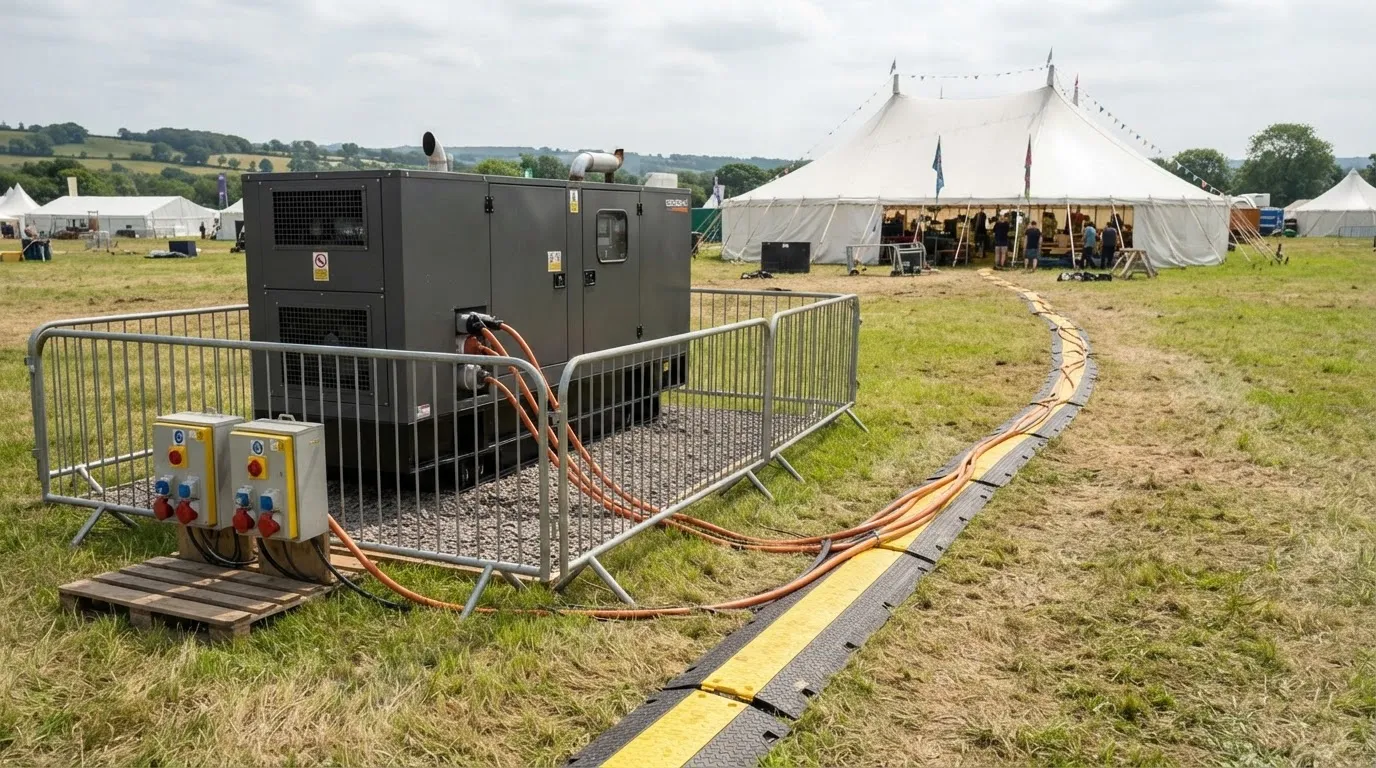
- Place them on firm, level ground with vehicle access for delivery and refuelling.
- Fence them off from the public.
- Point exhausts away from people, tents, marquees and air intakes, as exhaust fumes contain carbon monoxide.
- Think about noise for neighbours, audiences and quiet areas.
3. Fuel
Store fuel in a secure, signed area away from ignition sources and public areas, with spill kits and fire extinguishers nearby. Agree a refuelling plan, ideally with generators stopped and cooled or using systems designed for refuelling while running.
4. Distribution and protection
Power should go through proper distribution boards with suitable protection, including residual current devices (RCDs) on final circuits, and an earthing arrangement designed by a competent person. Use industrial-style weatherproof connectors rather than domestic plugs and extension reels outdoors. Never let traders run their own leads from someone else’s supply.
5. Cable routes
- Plan routes on your site plan before the build.
- Where cables cross pedestrian or vehicle routes, use proper cable ramps, bury them, or fly them overhead at a safe height.
- Keep connections off the ground and out of standing water.
- Avoid running cables where vehicles will track over them during the build and breakdown.
6. Testing and checks
The installation should be inspected and tested before it is energised and used, with records kept. During the event, regular walk-round checks catch damaged cables, tripped devices and unauthorised connections. Portable equipment brought by traders should be in good condition.
Weather and power
Rain, standing water and wind all affect temporary electrics. Your weather plan should say what happens to power in a storm, who can isolate supplies, and when outdoor stages stop. Our guide to planning for bad weather at outdoor events covers trigger points.
Common problems and fixes
| Problem | Better approach |
|---|---|
| Generator too small, tripping at peak times | Collect load information early and size with headroom |
| Domestic extension reels used outdoors | Industrial weatherproof connectors and proper distribution |
| Cables across walkways with no protection | Cable ramps, burying or flying cables |
| Traders plugging into whatever they find | Allocated supplies, checked by the site electrician |
| Exhaust near a marquee or seating | Site generators away from people and structures |
Build it into your planning
Electrical safety should appear in your event risk assessment and in your crew briefings, so everyone knows not to touch distribution equipment unless authorised and who to call if something looks wrong.
Crew to support your build
Idloes Stage Crew supports event builds across Mid Wales, Shropshire and the borders, working alongside your electrical contractor on cable runs, ramps and site setup. See our services, book crew online or get in touch.