Every event, from a village fete to a three-day festival, needs a risk assessment. Too often it becomes a document copied from last year, filed away and never looked at again. A good one is short, specific to your site, and actually changes what people do on the day. This guide walks through how to write one that works.
Is a risk assessment a legal requirement?
In most cases, yes. Under the Management of Health and Safety at Work Regulations 1999, employers and self-employed people must make a suitable and sufficient assessment of the risks their work creates, both to workers and to anyone else affected, which at an event includes the public. If you have five or more employees, you must record the significant findings. Even where the law does not strictly require a written record, venues, local authority safety advisory groups, licensing officers and insurers will almost always ask to see one.
The HSE’s simple guide to managing risks and risk assessment at work is the best starting point, and its event safety pages cover issues specific to events.
The five steps
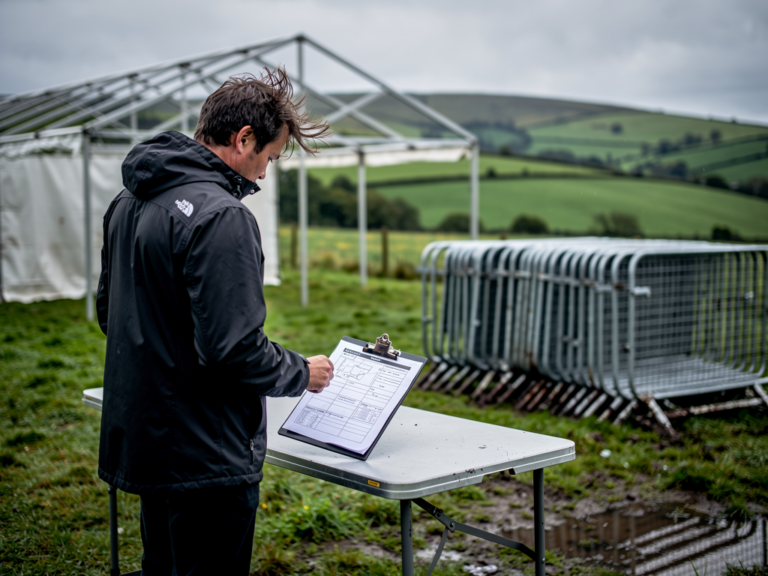
- Identify the hazards. Walk the site, ideally at the same time of day as the event, and list anything that could cause harm.
- Decide who might be harmed and how. Crew, contractors, performers, guests, children, people with disabilities, neighbours and passers-by can all be affected differently.
- Evaluate the risk and decide on controls. What are you already doing, and what more is reasonably practicable?
- Record and act on your findings. Write down the significant hazards, the controls, and who is responsible for each one.
- Review and update. Revisit the assessment when the plan changes, after a near miss, and on the day if conditions change.
Hazards that come up at almost every event
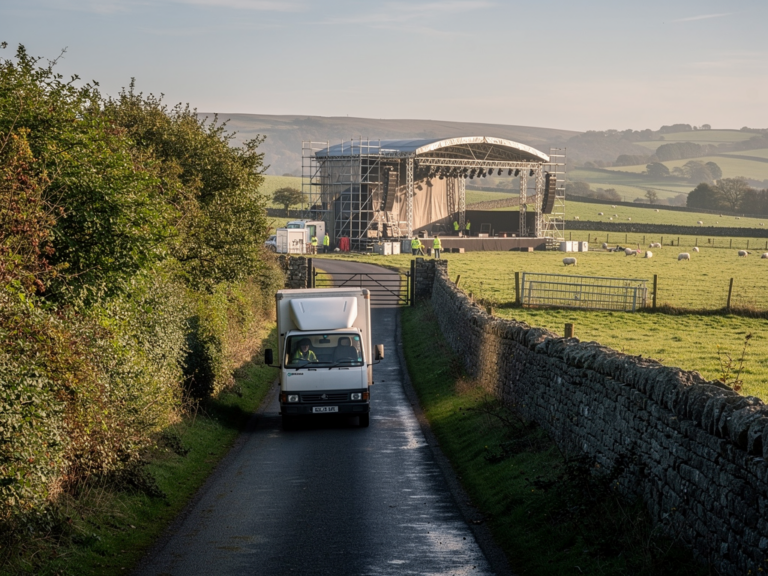
- Vehicle movements during the build and de-rig, especially reversing trucks and forklifts near people on foot.
- Manual handling of staging, flight cases, furniture and marquee parts.
- Work at height: rigging, truss, lighting, dressing and marquee work.
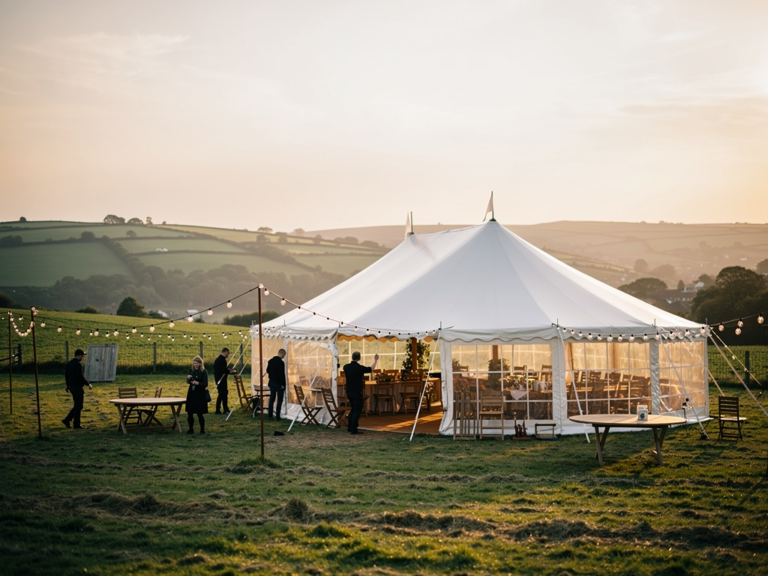
- Temporary structures and weather: stages, marquees and banners in high winds, plus heat, cold and lightning.
- Temporary electrics: generators, distribution and cable runs across walkways.
- Slips, trips and falls on cables, uneven ground, wet grass and dark areas.
- Crowd movement: entrances, exits, pinch points and emergency routes.
- Fire: catering equipment, gas bottles, generators and decorative materials.
- Fatigue: long build days followed by late load-outs.
Scoring risk with a 5×5 matrix
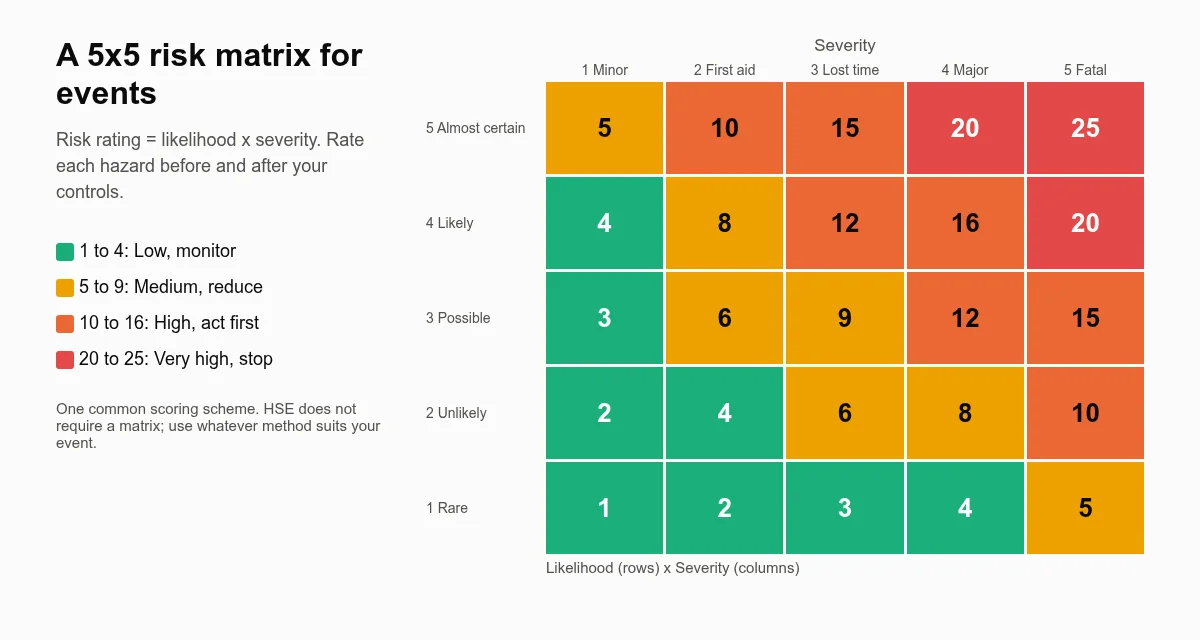
The law does not require you to score risks with numbers, but many organisers find a simple matrix helps them prioritise. Rate how likely harm is from 1 (rare) to 5 (almost certain), and how severe it would be from 1 (minor) to 5 (fatal), then multiply the two. Score each hazard before your controls and again after, so you can show the controls genuinely reduce the risk.
A worked example
Here is how two hazards might look for a 500-capacity outdoor concert with a single stage:
| Hazard | Who and how | Score before | Controls | Score after | Owner |
|---|---|---|---|---|---|
| Reversing trucks during load-in | Crew and contractors struck by vehicles | 3 x 5 = 15 | One-way route, trained banksman for every reverse, pedestrian exclusion zone at the dock, hi-vis for all crew | 1 x 5 = 5 | Site manager |
| Cables across the main walkway | Guests and crew tripping in the dark | 4 x 2 = 8 | Cables routed round walkways or under cable ramps, area lit after dusk, checked hourly | 2 x 2 = 4 | Crew chief |
Notice that the controls are specific and someone is named as responsible. “Take care” is not a control.
Contractors, suppliers and crew
Every supplier on site should give you their own risk assessments and method statements for their work: staging, rigging, catering, generators and so on. Your job as organiser is to coordinate them, so that one contractor’s activity does not create a hazard for another. Collect them well before the event, check they match your site and schedule, and include them in your site induction.
The building and dismantling of stages and similar structures also falls under the Construction (Design and Management) Regulations 2015, which HSE explains in its event safety guidance. Planning your load-in properly is part of managing that risk; see our guide to event load-in and load-out planning for how to work out crew numbers and schedules.
Briefing your crew on the day
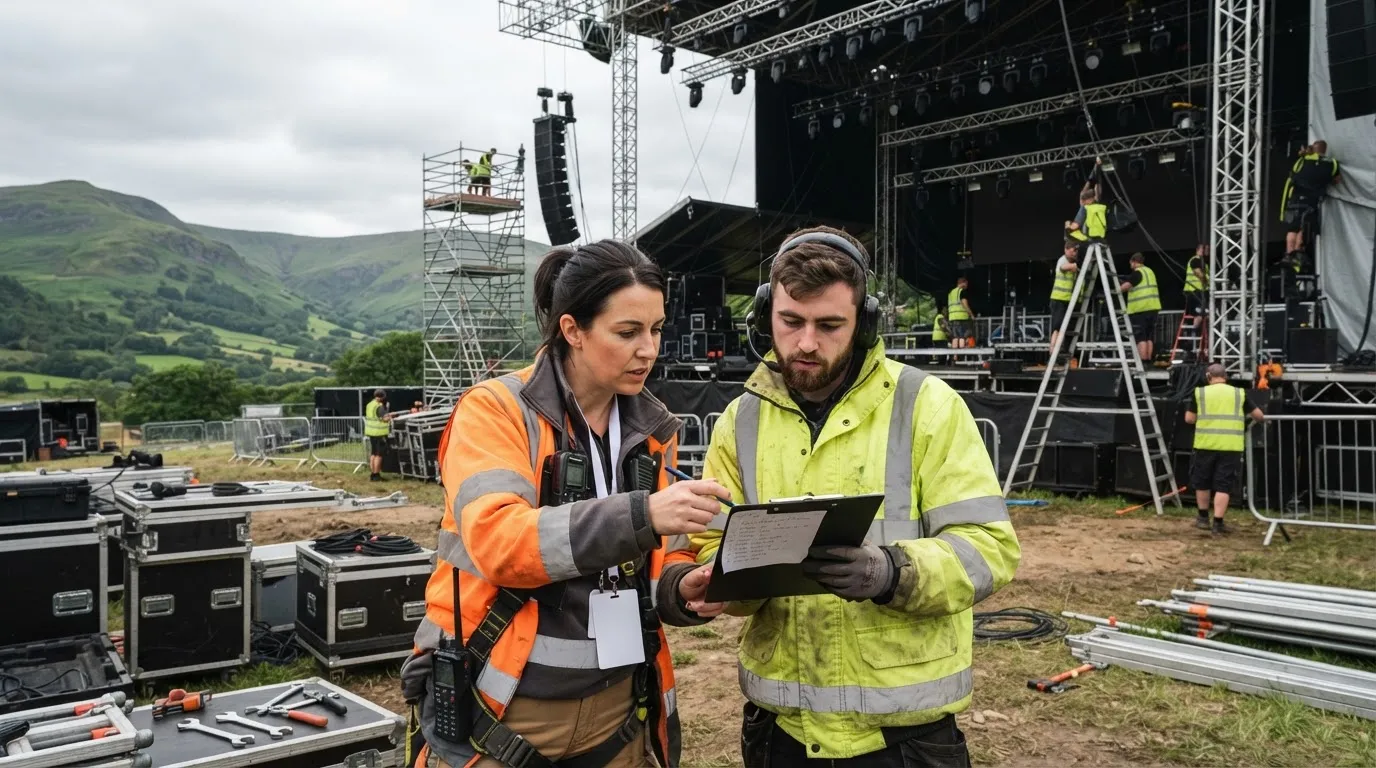
A risk assessment only works if the people doing the job know what is in it. Before work starts, a five-minute briefing should cover:
- The site layout, vehicle routes and exclusion zones
- Any work at height and who is authorised to do it
- Required PPE
- First aid, the fire assembly point and how to raise the alarm
- Who to report hazards and near misses to
- Weather triggers, such as the wind speed at which structures must be lowered or cleared
Wider planning documents
For larger events, the risk assessment sits alongside an event management plan, a site plan, emergency and medical plans and, where relevant, a crowd management plan. The Purple Guide covers these in detail and is widely used by local authority safety advisory groups. Organisers of larger public events should also follow the progress of the Terrorism (Protection of Premises) Act 2025, known as Martyn’s Law, which will place new security preparedness duties on qualifying events and venues once it comes into force.
Risk assessment checklist
- Site visited and hazards listed for build, show and de-rig
- Every hazard has specific controls and a named owner
- Supplier risk assessments and method statements collected and checked
- Emergency arrangements agreed with the venue
- Crew briefed and briefing recorded
- Assessment reviewed on the day and after the event
Experienced, safety-aware crew
Idloes Stage Crew provides experienced event crew across Mid Wales and the borders who are used to working to site risk assessments and method statements. See what our crew can do, read about us, see who we work with, or book crew for your event. Questions? Get in touch.