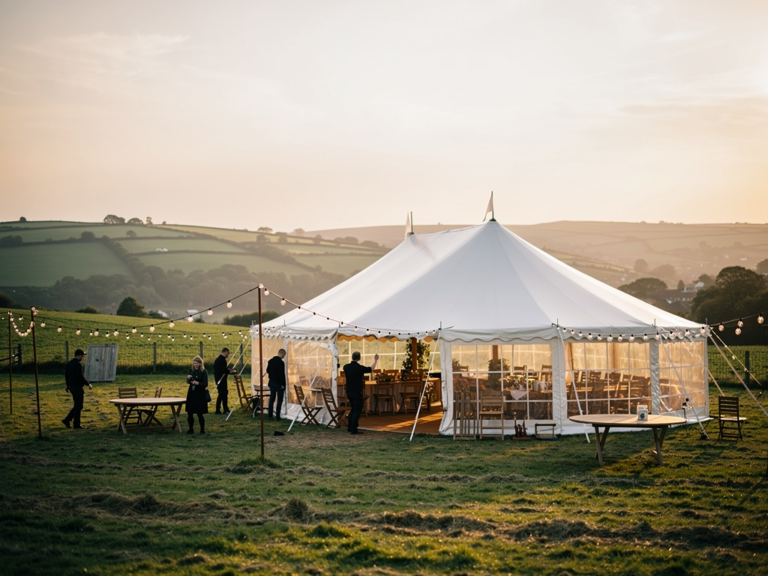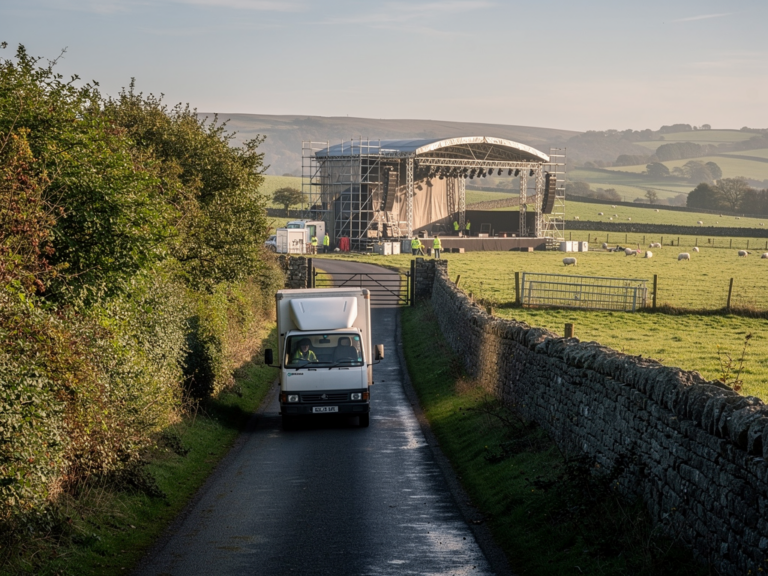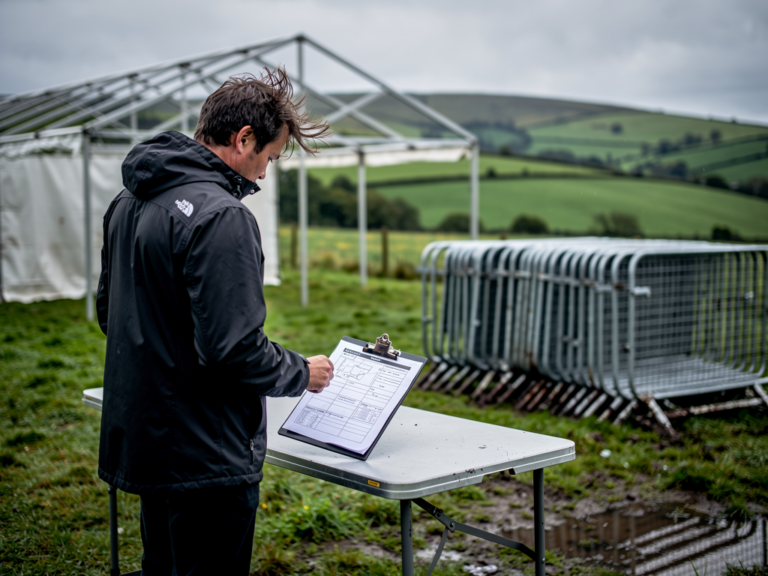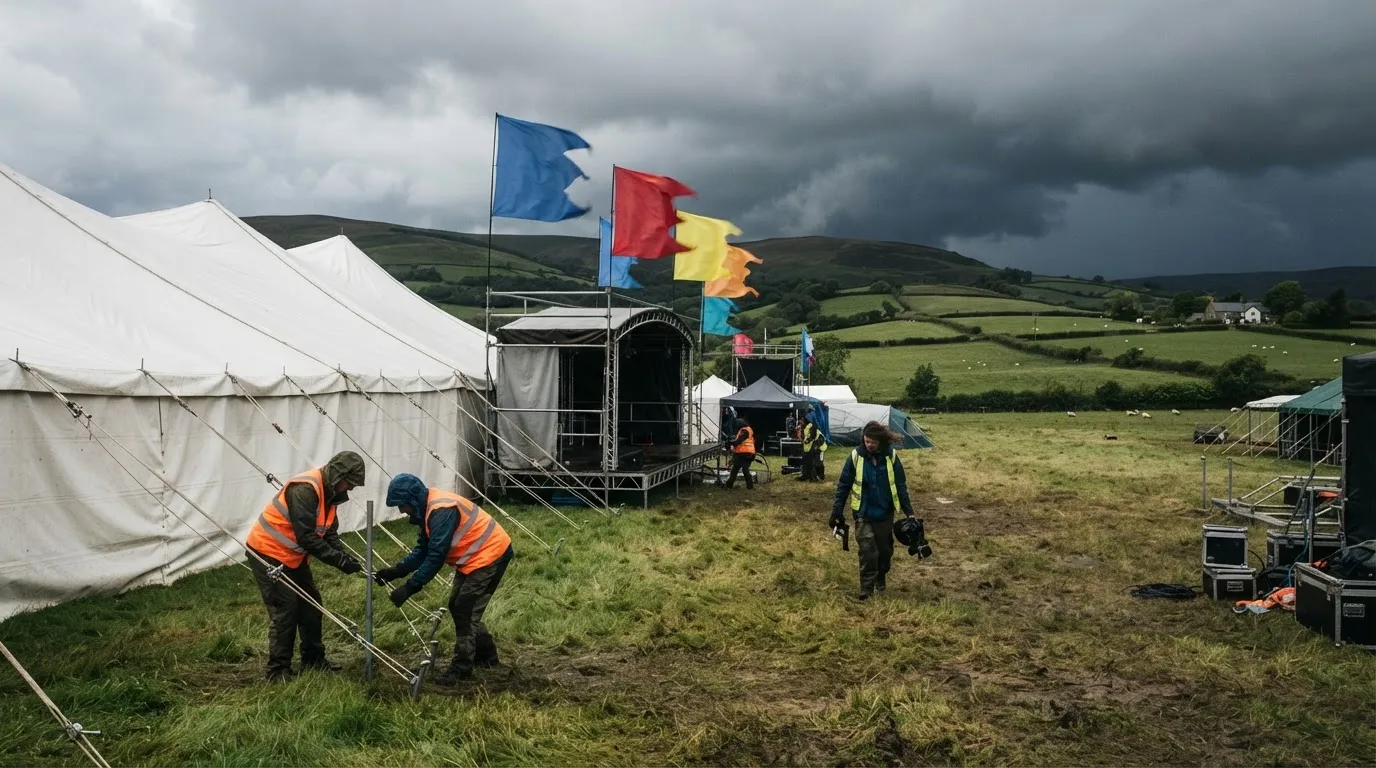
In the UK, the question is not whether the weather will affect your outdoor event, but how. A sunny forecast a week out can turn into gusty showers by the morning of the build. Organisers who cope well are not lucky; they have decided in advance what they will do at each stage, who makes the call, and how the crew will respond.
This guide covers the weather risks that matter most at outdoor events and how to plan for each.
Wind: the biggest risk to temporary structures
Marquees, stages, roof systems, PA towers, LED screens, banners and gazebos all catch the wind. Most serious weather incidents at events involve temporary structures in strong winds or gusts. Every structure should come with a wind management plan from its supplier or designer, setting out the wind speeds at which specific actions must be taken, such as removing banners and scrims, lowering a PA, closing a structure to the public, or evacuating it entirely.
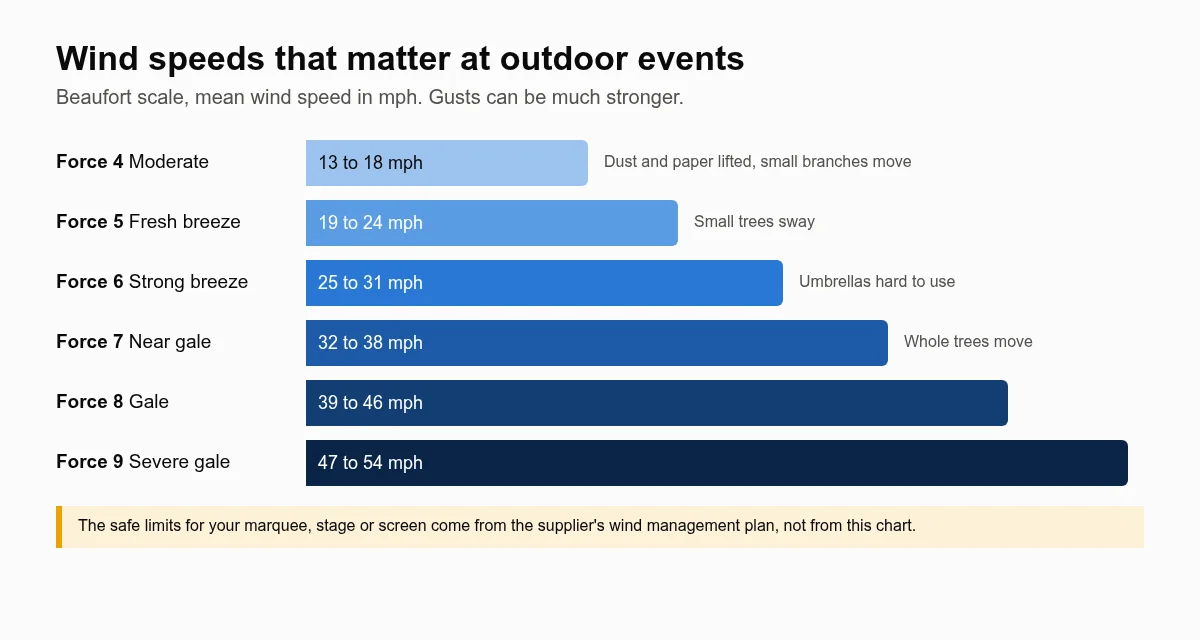
Two points catch people out. First, forecasts usually quote mean wind speed, but structures are threatened by gusts, which can be far stronger. Second, wind at the top of a stage roof or screen is often stronger than at ground level. That is why larger events use an anemometer mounted at height on site rather than relying on a phone app.
Building a wind action plan
| Level | Example trigger | Example action |
|---|---|---|
| Normal | Below the first threshold in the wind management plan | Routine monitoring at set intervals |
| Alert | Wind or gusts approaching the first threshold, or a forecast change | Increase monitoring, brief crew chiefs, prepare to remove banners and scrims |
| Action | First threshold reached | Remove cladding and banners, lower flown items where planned, stop work at height |
| Stop | Upper threshold reached | Clear structures of people and implement the evacuation or show-stop plan |
The specific numbers must come from the structure supplier. What you add is who monitors, how often, who has the authority to stop the show, and how the message gets to crew, performers and the public.
Rain and ground conditions
- Vehicle access. A grass field that takes a truck happily in August may bog it down in October. Plan trackway for routes and hardstanding for heavy vehicles, and have a tractor on call.
- Electrics. Temporary power distribution, connectors and cable runs must be suitable for outdoor use and kept out of standing water.
- Slips and trips. Wet grass, mud and flooring edges cause falls. Matting at entrances and walkways, plus good lighting after dark, helps.
- Crowd movement. Rain makes audiences crowd under cover and move faster to exits. Make sure covered areas do not become dangerous pinch points.
- Load-out. Wet equipment is heavier, more slippery and needs drying before storage, so build extra time into the de-rig. Our guide to load-in and load-out planning explains how to allow for this in crew numbers.
Heat and sun
Hot weather brings different risks: dehydration and heat exhaustion among crew working hard during the build, and among audiences standing for long periods. Provide free drinking water, shade and rest areas, schedule heavy manual work for cooler parts of the day where possible, and brief crew to look out for each other. First aid and welfare teams should be told when hot weather is forecast.
Lightning
Thunderstorms are less common in the UK than wind and rain but carry serious risks for anyone working at height on metal structures, and for crowds in open fields. Your plan should say how you will monitor for approaching storms, when work at height and rigging stops, and where people will shelter.
Monitoring the weather
- Track forecasts from the Met Office from a week out, and check for National Severe Weather Warnings.
- For larger events, consider a site-specific forecast and on-site anemometer.
- Name one person responsible for monitoring, with set check intervals that increase as conditions worsen.
- Log readings and decisions, so you can show what you knew and when.
Put weather into your risk assessment
Weather is a hazard like any other, and belongs in your event risk assessment with controls and named owners. Our event risk assessment guide shows how to score and control it. The HSE’s event safety guidance and The Purple Guide both cover temporary structures and adverse weather in more detail.
What your crew should know on the day
- Who is monitoring the weather and how alerts will be passed on
- Which banners, scrims and soft goods come down first, and who removes them
- When work at height stops
- Where to shelter and where to muster
- Extra kit on site: ratchet straps, ballast, sandbags, trackway and waterproof covers
Crew who know what to do when the weather turns
Idloes Stage Crew works outdoor events across Mid Wales and the borders in every kind of weather. See what our crew can do, read about the events we support, or book crew for your next outdoor event. Questions? Get in touch.