Every event build involves lifting, carrying, pushing and pulling: flight cases, staging decks, barrier, cable drums, trusses and marquee parts, often on uneven ground, up ramps and against the clock. Musculoskeletal injuries such as back and shoulder strains are among the most common injuries in the events industry, and many build up gradually over long shifts rather than happening in one dramatic moment.
This guide explains what the law expects, how to assess handling tasks, and the practical steps that keep crew working safely from the first truck to the last.
What the law says
The Manual Handling Operations Regulations 1992 set out a clear order of priorities for employers:
- Avoid hazardous manual handling as far as reasonably practicable.
- Assess any hazardous manual handling that cannot be avoided.
- Reduce the risk of injury as far as reasonably practicable.
There is no single legal weight limit. What matters is the whole task. HSE’s manual handling guidance explains the regulations and provides free assessment tools. Manual handling should also be part of your wider event risk assessment.
The TILE check
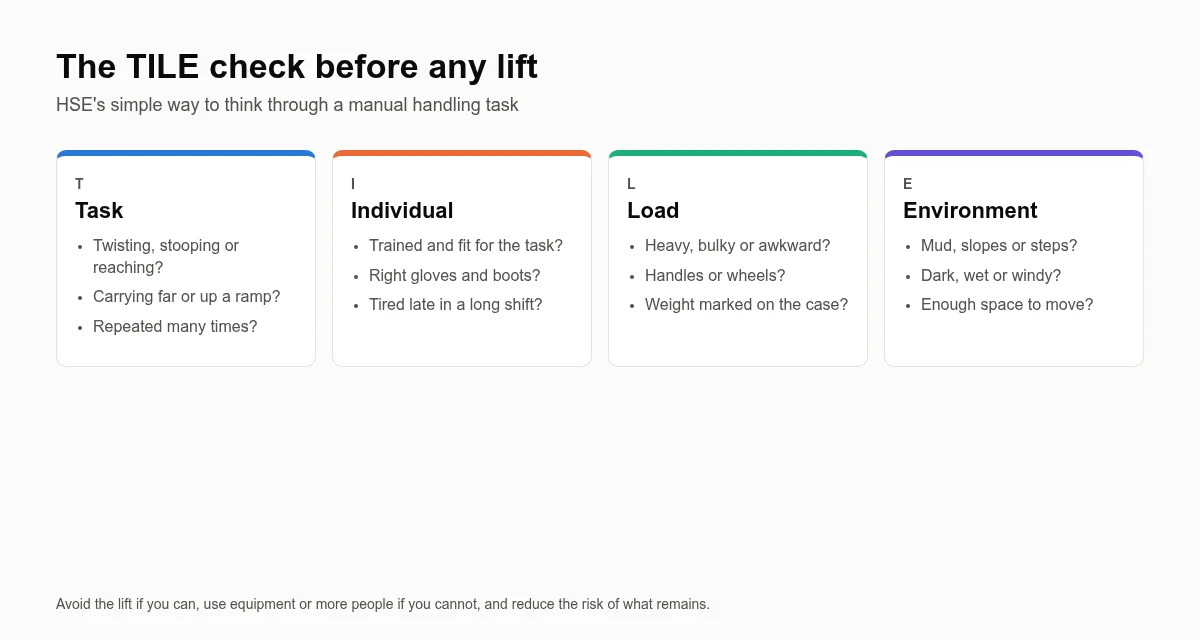
TILE is a simple way to think through any handling job before it starts:
- Task: does it involve twisting, stooping, reaching up, carrying a long way, going up or down a ramp, or repeating the same lift many times?
- Individual: is the person trained, fit for the task and wearing the right gloves and boots? Are they tired after a long shift?
- Load: is it heavy, bulky, unstable or hard to grip? Does it have handles or wheels? Is the weight marked?
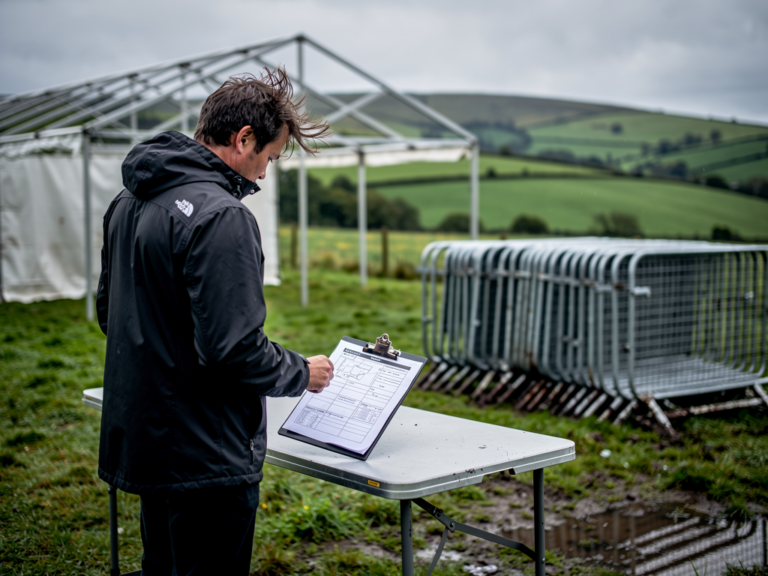
- Environment: mud, slopes, steps, poor light, wind and rain, cramped trucks and crowded backstage areas all make handling harder.
Practical ways to reduce the risk
Plan the site and the trucks
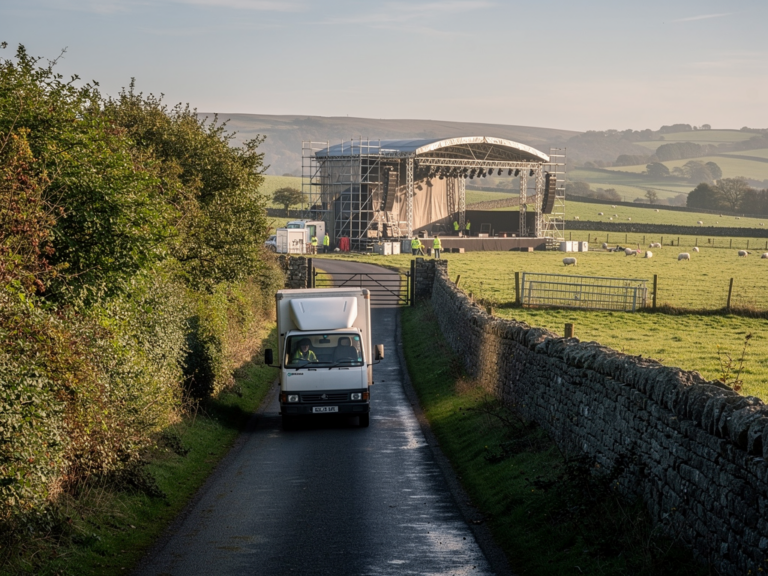
- Get trucks as close to the work area as safely possible to shorten carry distances. Your site plan should show loading points.
- Lay trackway on soft ground so cases can be wheeled rather than carried.
- Ask suppliers to load trucks in build order, so heavy kit is not shuffled around twice.
Use equipment
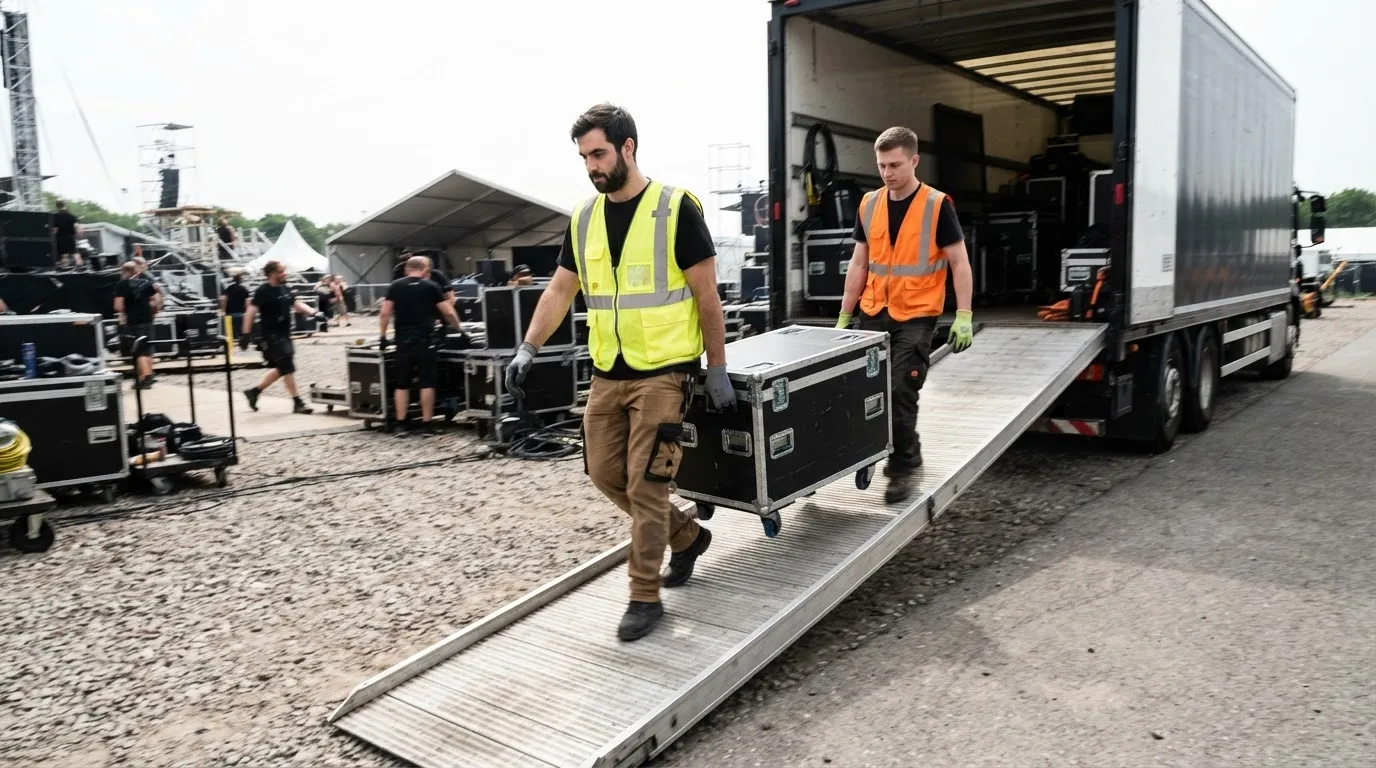
- Wheeled flight cases, dollies, sack trucks and pallet trucks for most moves
- Tail lifts, forklifts and telehandlers for heavy items, operated by trained, authorised people
- Hoists and motors for flying truss and PA
Lifting equipment must be suitable, inspected and used by competent people under the Lifting Operations and Lifting Equipment Regulations (LOLER).
Team lifts done properly
Many event items are designed as two- or four-person lifts. A team lift only works if one person leads, everyone knows the route before lifting, and moves happen on a clear call: “ready, lift”, “walking”, “ready, down”. People of similar height make carrying easier. Do not assume two people can lift twice the weight one person can; team lifting is less efficient than that.
Good technique
- Check the route is clear before you pick anything up.
- Get close to the load, with feet apart for a stable base.
- Bend your knees, keep your back in its natural curve, and get a firm grip.
- Keep the load close to your waist and avoid twisting; move your feet instead.
- Put it down, then adjust its position.
Fatigue: the hidden risk
Load-outs usually happen at the end of a long day, often late at night, in the dark and sometimes in the rain. That is when tired crew cut corners. Schedule breaks, rotate heavy tasks, make sure there is enough crew for the job, and keep water and food available. Our guide to planning crew numbers for load-in and load-out helps you avoid running short.
| Common problem | Better approach |
|---|---|
| Carrying cases across a muddy field | Trackway and wheeled cases, trucks parked closer |
| One person lifting a heavy deck | Planned team lift with a leader, or mechanical aid |
| Lifting from deep inside a truck | Slide loads to the tail first, use the tail lift |
| Same crew doing heavy lifts all shift | Rotate tasks and build in breaks |
| Rushing at the end of the night | Enough crew booked for the load-out, not just the build |
Brief it, every time
Cover manual handling risks in your daily briefing: which items are team lifts, where equipment is, and the routes being used. Our guide to running a crew briefing has a simple structure to follow.
Experienced crew for your event
Idloes Stage Crew provides trained, experienced crew for load-in, builds and load-out across Mid Wales, Shropshire and the borders. See our services, book crew online or contact us to talk through your event.